
Bird Dogs & Training
|
10/29/2026
Sporting Dog Shorts - Feed the Hunt: When Should You Feed Your Bird Dog?
On a hunt day, when your dog eats can be just as important as what's in the bowl.
by Dr. RuthAnn Lobos
Related Articles


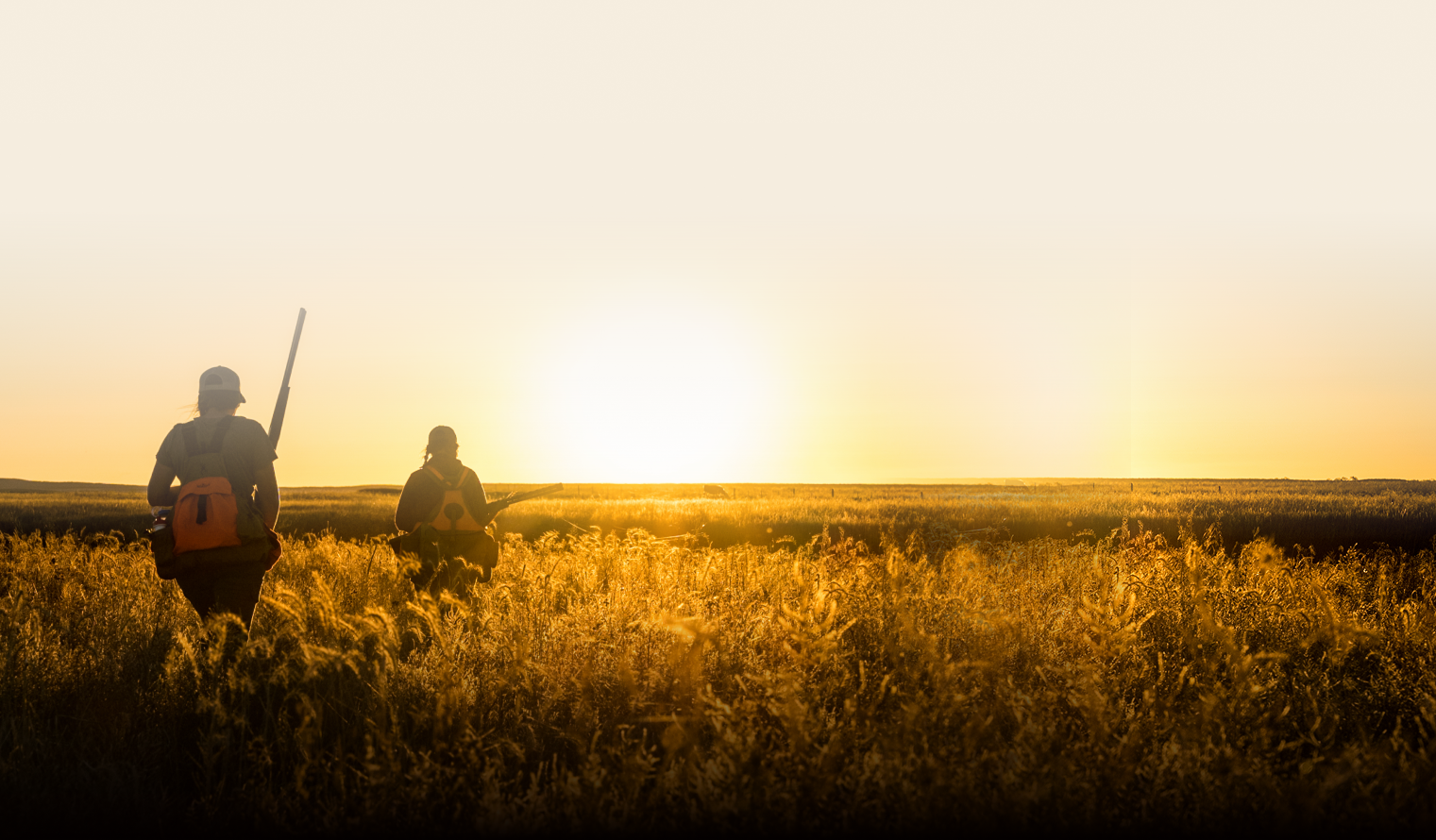
The alarm goes off before sunrise. You're checking the weather, loading the truck, grabbing water, collars and gear, and your bird dog already knows exactly what's happening.
Breakfast might seem like one more item on the checklist. But on a hunt day, when your dog eats can be just as important as what's in the bowl. The goal is to fuel the work without asking the digestive system to do its heaviest lifting at the same time.
So, Should You Feed Your Dog Before or After a Hunt?
For most healthy adult bird dogs, it's best practice to avoid pairing a large meal with strenuous exercise. Once the tailgate drops—whether your dog is pushing through cattails, climbing steep chukar country or covering grass for pheasants or quail—the body needs to prioritize movement, oxygen delivery and the demands of the hunt, not a full stomach.
Exercise can also increase gastrointestinal motility, moving food through the GI tract more quickly and potentially affecting nutrient absorption.
Digestion also diverts blood flow from the area of the brain for alertness, which is why we as humans often get sleepy after lunch. Our bird dogs need their focus and concentration to be dialed in when we say their favorite phrase, “Hunt ‘em up!”
Research in canine athletes has shown differences in endurance and energy metabolism depending on whether dogs exercise in a fasted or fed state. But that doesn't mean there's one feeding strategy for every dog. Age, body condition, health, workload, meal size, and the intensity and duration of exercise all matter.
What's a Safe Feeding Window?
This is where bird dog owners understandably want a number: Just tell me how many hours before the hunt.
Here's the important thing to understand: a full meal doesn't leave a dog's stomach quickly. Gastric emptying can take 6 to 8 hours or longer, depending on factors such as the meal and the individual dog.
That's why, when there's an early morning hunt, feeding the main meal the night before is the preferred approach. Rather than putting a big breakfast into the stomach shortly before a dog starts working, give that meal plenty of time to move through the digestive process overnight.
This is also important when we think about gastric dilatation-volvulus, or GDV, commonly called bloat.
GDV is a life-threatening emergency in which the stomach becomes distended and can twist. Its causes are complex, and meal timing alone cannot eliminate the risk. But for a dog predisposed to GDV, how much is eaten at one time and how meals fit around vigorous exercise deserve particular attention.
What About Food and Water During the Hunt?
Hydration absolutely matters for a working bird dog. Dehydration affects endurance, cognition, and even scenting ability. It can be cumulative and often hard for our bird dogs get back to a fully hydrated state on their own.
Bring fresh water into the field and offer your dog regular opportunities to drink during breaks rather than waiting until the dog looks thirsty or worn down.
Temperature, humidity, altitude, terrain and workload can all change the demands of the day. And pay attention to the dog in front of you: Is your dog moving normally? Is that familiar drive still there? How quickly is the dog recovering between runs?
But there's also an important hydration myth worth clearing up.
Myth: Hard-Working Dogs Need Electrolytes Just Like Human Athletes
They don't.
This is one area where treating dogs like four-legged human athletes can steer us in the wrong direction.
Humans lose significant amounts of water and electrolytes through sweat during prolonged exercise. Dogs don't sweat over their bodies the way we do. They primarily rely on panting for evaporative cooling, with limited sweating through areas such as the paw pads.
So the human formula of sweat + electrolyte loss = sports drink doesn't translate directly to our dogs and sometimes can even lead to further gastrointestinal issues.
My Favorite Hydration Hack: Float the Food
One simple way I support hydration around training and hunting is to float my dogs' food — adding water to their kibble until it looks like cereal in milk.
It doesn't replace fresh drinking water in the field, but it's an easy way to add water to something I'm already doing.
What Should You Do After the Hunt?
When you get back to the truck, it can be tempting to immediately fill the food bowl because your dog just worked hard.
Think recovery first.
Give your dog a chance to stop working, cool down and settle. Offer fresh water. Check paws, pads and the rest of the body for injuries or problems you may not have noticed while your dog was running.
Once your dog has recovered from the immediate exertion, nutrition becomes part of preparing for what comes next. Like humans, there is a window of about 30 minutes where the cells are most receptive to nutrients for repair, recovery, and refueling.
If you're hunting several days in a row, training regularly or asking your dog to work throughout a long season, you're not only feeding for what happened today. You're also feeding for recovery and tomorrow's performance.
And when it is time to feed, that's another opportunity to float the food and add some additional water to the meal.
What About Post-Hunt Supplements?
Recovery powders, electrolyte products, joint supplements and other performance products are everywhere. But before reaching for a supplement, start with the nutritional foundation.
Start with a complete and balanced diet.
Choose one that matches your dog's workload. A dog doing sustained endurance work may need more calories and a different nutrient profile than one working for shorter periods at lower intensity.
Then look at the individual dog.
Monitor body condition as training, temperature and weekly mileage change. What maintains ideal condition in the offseason probably isn't enough during several hard hunting days in a row.
One supplement I do recommend is Purina Pro Plan Veterinary Supplements FortiFlora. It supports gut health—important because about 70% of a dog's immune system is associated with the GI tract, and healthy digestion helps support performance. It can also be mixed into water as a flavorful way to encourage finicky drinkers, including bird dogs too focused on finding birds to stop and drink.
A Simple Hunt-Day Feeding Game Plan
The night before
For an early morning hunt, consider making this the main feeding opportunity. Remember that gastric emptying can take 6 to 8 hours or longer, so feeding the night before can create useful separation between a substantial meal and strenuous morning exercise.
Before first light
Avoid putting a large meal right next to hard exercise. Individual dogs and circumstances vary, so build the feeding plan around your dog's health and workload.
In the field
Carry fresh water and offer it regularly during breaks. For routine hydration in a healthy dog, think water, not sports drinks.
Back at the truck
Give your dog time to cool down, settle and drink before reaching for the recovery meal.
At mealtime
Try floating the food with water, like cereal in milk. It's a simple way to work additional water into your dog's normal routine.
Throughout the season
Watch more than the scale. Pay attention to body condition, stamina, stool quality, appetite and how well your dog recovers from one hunt to the next.
The Bottom Line
There isn't one perfect feeding schedule for every bird dog, just as there isn't one kind of bird hunt.
A young dog making short training runs has different demands than a conditioned dog covering big country for hours. Weather changes. Terrain changes. Workload changes. And nutritional needs can change with them.
That's why I look at performance nutrition as the whole picture: what we feed, how much we feed, when we feed, hydration, workload and the individual dog.
And we don't have to make it more complicated than it needs to be.
Your cart is empty