

Bird Dogs & Training
|
10/29/2026
Is My Sporting Dog in Shape?
How diet and weight affect the longevity and health of your sporting dog
by Gilbert Randolph
Related Articles


Chronic obesity is a major driver of health problems and injuries in dogs, as it is with humans. This is especially true as dogs age, and it's no surprise that keeping a sporting dog at a healthy weight can promote a much better quality of life.
With this in mind, we spoke with Dr. RuthAnn Lobos, Senior Veterinarian at Nestle Purina Petcare, about how keeping dogs lean can keep them chasing birds longer.
The basis of this information is Purina's 14-year study of 48 Labrador Retrievers. The study followed the lifespans of dogs who were kept in lean body condition, alongside dogs which were fed more. The dogs fed a 25% reduced diet lived an average of 1.8 years longer than the other dogs studied. By two years of age, the frequency of hip dysplasia was reduced by 50% in the lean fed dogs.
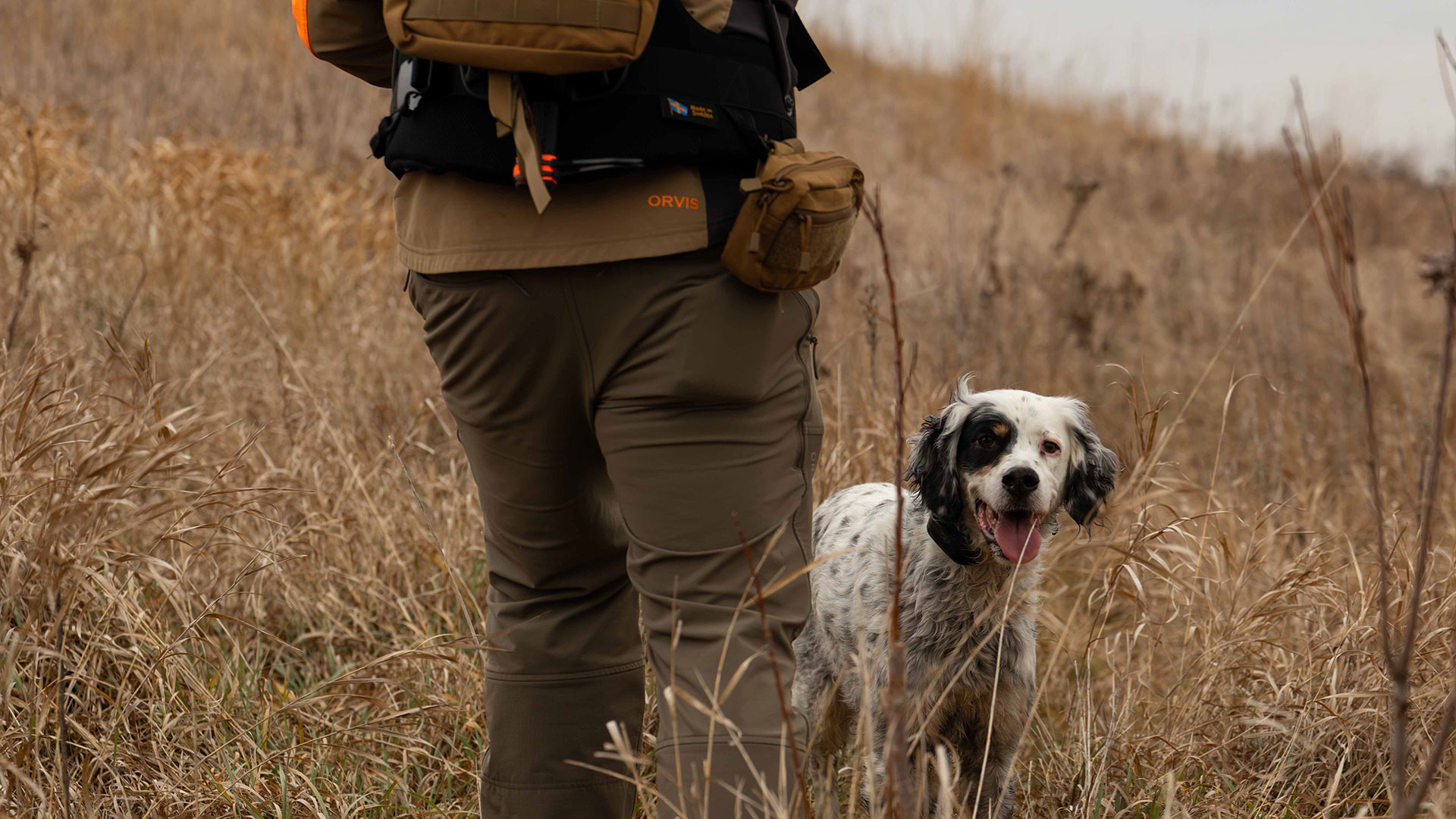
Before changing a dog's diet, the owner should assess what body condition their dog is in. A dog's ribs, waist and abdomen are the main areas to focus on when assessing body condition. You should be able to feel the dog's ribs when running your hand along its side without applying excess pressure. When looking down at a dog, its waist should have a recognizable hourglass shape, and their abdomen should have a noticeable tuck. In overfed dogs, the ribs won't be easy to feel, and they won't have an hourglass shape to their waist. Overfed dogs may still have some amount of abdominal tuck, so recognizing the other indicators can help dog owners accurately assess body condition. Underfed dogs will have their spine, pelvis bones and ribs visible from a distance and will display a lack of muscle mass and healthy fat.
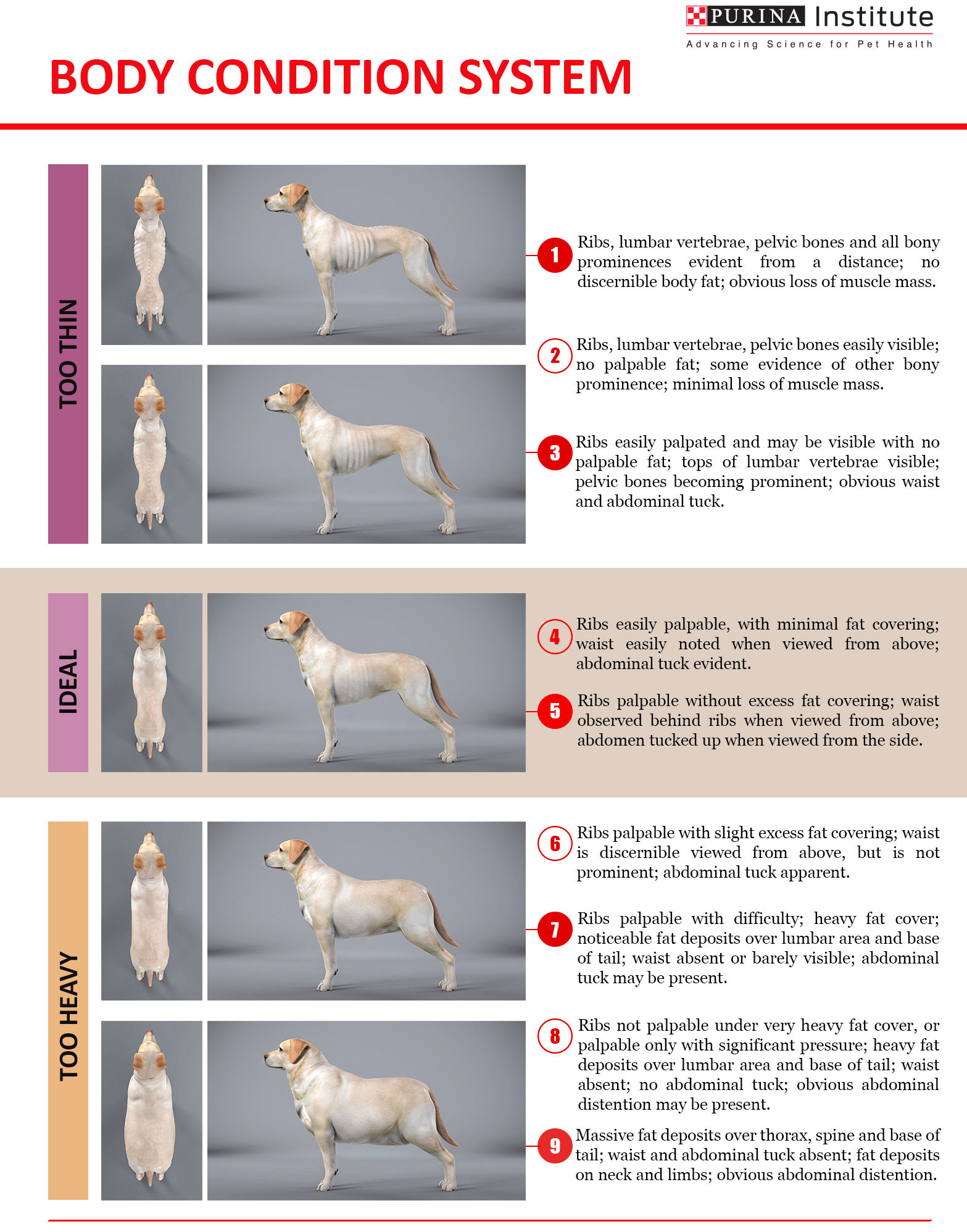
Purina has a body condition scoring system available to help people assess their sporting dog's weight. It is scored from 1-9, with 1-3 being underfed, 4-5 being ideal and 6-9 being overfed. Visual examples of the scale are available here and a video on how to conduct the assessment is available here.
If a dog scores higher than the 4-5 range, a change in diet is recommended. Before going all in on cutting calories or changing their feed, Dr. Lobos recommends easing your dog into the transition.
"You are looking for a 2-4% weight loss per week," Dr. Lobos said. "Cutting calories too quickly can cause rebound and end up leading them to gain weight in the long term. Any diet change should be done over a 5–7-day timeframe to help keep a dog from getting GI upset."
A vital step in keeping a consistent, lean feeding schedule is using a measuring cup. For dogs in the 51-75 pound range eating Purina ProPlan, the recommended feeding amount is 2 ¼ - 3 cups of feed per day. The exact amount will change depending on a dog's activity and caloric consumption, but using a measuring cup will indicate if a dog is being fed significantly over the recommended amount. Keeping feeding times and amounts consistent is also a great step toward giving sporting dogs a healthier lifestyle. If a dog is not feeling full while transitioning to a new diet, Dr. Lobos recommends adding low calorie treats such as shredded cabbage. The extra fiber and water will help them feel full without adding calories.
She also noted treats can be a potential source of weight gain, especially when a dog associates attention with food.
"Dogs are often very conditioned to associate attention with food and while we all love to give our dogs treats, it can be helpful to disassociate those things," Dr. Lobos said. "If your dog is seeking attention, try taking them for a walk or throwing the bumper instead of reaching for a treat."
Dog owners may worry if their dog is being fed enough, and whether a lean diet might lead to a weaker skeletal system or lower growth — particularly with puppies. But Purina's study showed no adverse effects in the lean fed group on skeletal maturation, structure or metabolism. In fact, at the end of their lives, 83% dogs which were not lean-fed developed osteoarthritis (OA) while only 50% of the lean-fed dogs developed OA. The lean-fed dogs also showed 50% less prevalence of hip dysplasia, and those dogs who did develop it had milder symptoms.
Finding a veterinarian who is experienced with working dogs can help you develop a plan and monitor your dog's eating. If a dog is losing too much weight, such as during the hunting season, extra feeding may be necessary. If a dog is eating more but still losing too much weight, they should be checked to ensure they don't have an issue with parasites or gastrointestinal problems. If parasites are not an issue, they can be transitioned to a more calorically dense diet during high activity seasons.
Whether a hunter has a young, driven GSP or a setter whose most active years are behind it, keeping sporting dogs lean will give them both a better quality and quantity of life. Working with a knowledgeable veterinarian, learning about the ideal body condition scoring system and using high-quality feed are great first steps in making sure your canine hunting buddy can keep chasing birds well into their golden years.
Your cart is empty