
Hunting Forecast
|
08/17/2026
Promises on the Horizon
It is time. Prairie grouse seasons loom. Reports are a mixed bag. Birds will fly.
by Tom Carpenter
Related Articles


Our native prairie grouse – sharp-tailed grouse, prairie chickens and sage grouse – are magnificent creatures, at once delicate and tough.
Delicate because they require habitat specific to their needs.
Tough because they can survive most-all of what nature can throw at them – from arctic cold to desert-like heat, horrible blizzards to rainy springs, powerful summer thunderstorms to freight-train winds, and you can throw drought in there for good measure. They evolved here.
What they can't do is make a go of it without good habitat: grasslands from native prairie to smartly grazed pasturelands to sagebrush steppe.
You will find habitat as a recurring theme in PF & QF'S 2026 Prairie Grouse Primer. Weather has its effect. But good habitat solves many ills. The reports are all over the board, which means you pretty much just have to go hunt. Do it.
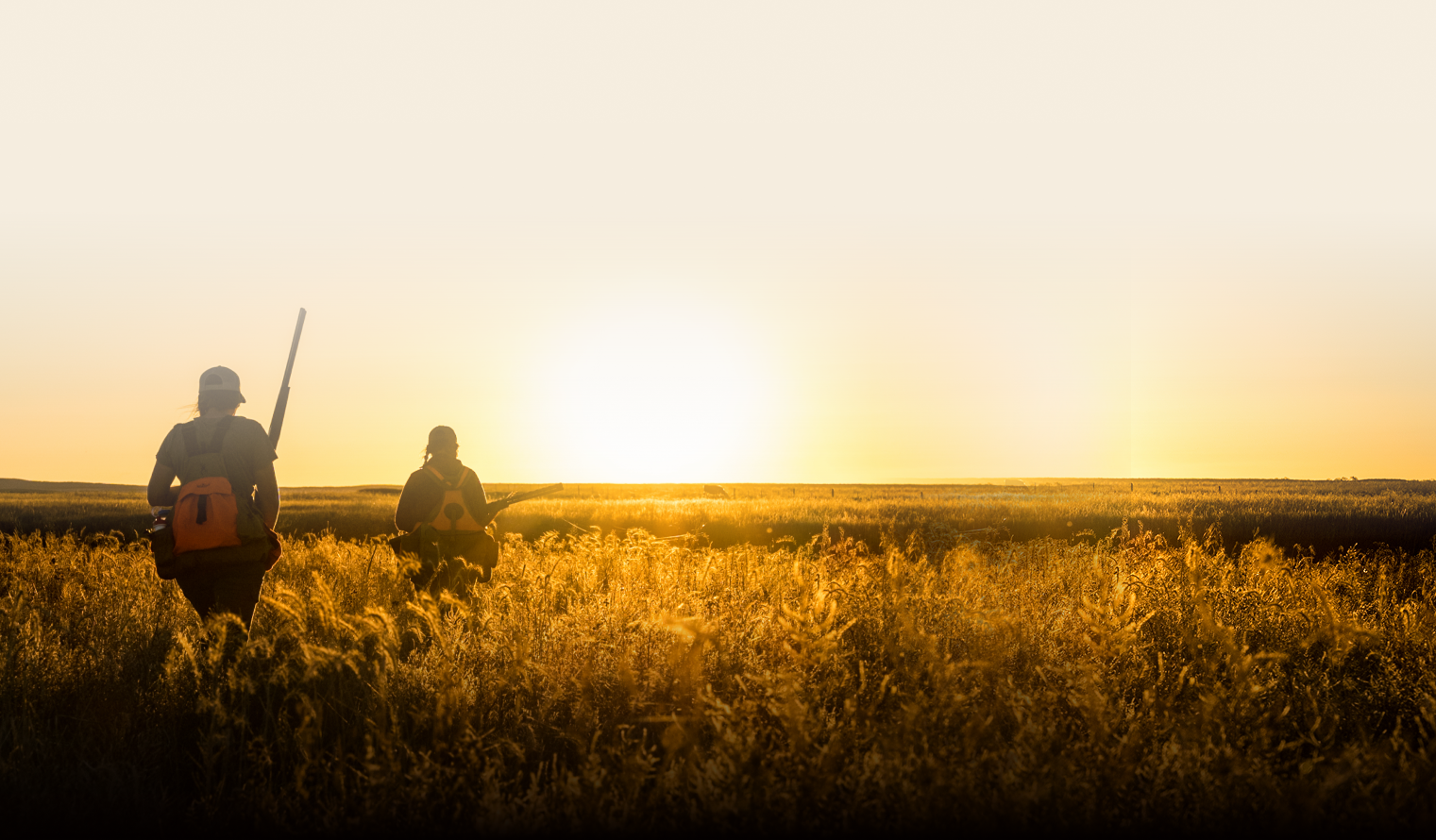
We are never promised a bird when we step off behind a good dog to look for prairie grouse. But I can promise you the swish of grass against pantlegs, puffs of cotton clouds against a blue autumn sky, and a shimmering horizon beckoning the soul.
— Tom Carpenter, 2026 Prairie Grouse Primer Editor
Select a State
Idaho
Prairie Grouse Primer 2026 - Idaho
Idaho Prairie Grouse Hunters Will Have to Work
By Jack Hutson
Whether too little rain or too much, the spring and summer of 2026 are throwing some challenges at prairie grouse across their range.
"Idaho as a whole is actually the exception this year, as temperatures and precipitation were about normal. The precipitation since the first of the year was even slightly above normal," says Jeff Knetter, Idaho Fish and Game (IDFG) upland game and migratory game bird coordinator. "That said, weather conditions across southern Idaho (Idaho's primary prairie grouse range) are pretty similar to last year; warmer and drier."
Pratt Griffeth, PF & QF Coordinating Wildlife Biologist, agrees. "Southeast Idaho experienced incredibly mild winter temperatures, with very little snow," he says. "Most of the precipitation fell as rain, which is almost unheard of for winter in this area."
Indeed, winter weather conditions were extremely mild across Idaho. What does that mean for prairie grouse?
Griffeth offers last year's evaluation from a hunter's perspective: "Last season was the slowest season for sharpies (and Huns) that I have had in our region the past five years. Numbers were down and brood survival seemed poor. I believe that the drought conditions Knetter described made conditions tough for broods."
After an amazing season for prairie grouse in 2024, the 2025 season fell flat. "We saw more than a 30% decrease in total harvest from 2024 for both sharp-tailed grouse and sage grouse," says IDFG Staff Biologist and Prairie Grouse Specialist Jennifer Struthers.
Struthers describes how we got here. "We had good spring counts of both sage grouse and sharp-tailed grouse coming into the 2025 season," she says. "But nesting and brood rearing conditions were warmer and drier than in prior years, creating poor conditions for chick production."
"Fall 2025 turned out to be an average harvest season for sharp-tailed grouse and a slightly below average season for sage grouse," says Struthers. "Even with mild winter conditions, it was not surprising to learn that counts of sage and sharp-tailed grouse on leks were down going into spring 2026."
At first, things didn't seem to be all bad across the arid south. "The lack of prolonged cold rain during the weeks of nesting was some good news. I believe broods did well during the period immediately following the hatch," Griffeth predicts.
"Unfortunately, it seems, nesting and brood-rearing weather conditions this year were even drier than last year," counters Struthers. Using the U.S. Drought Monitor, Struthers points out that all sage and sharp-tailed grouse habitat in Idaho is currently experiencing some stage of drought, with most in extreme to exceptional drought status.
Looking to dodge draught severity, one might consider the Salmon Region, the northern part of the Upper Snake Region, or the far corner of the Southeast Region.
Altogether, Struthers predicts similar or lower productivity than last year for prairie grouse. Her final word on prairie grouse this season? "With fewer juveniles available, we anticipate harvest for both species this year to be lower than recent years."
Struthers was careful to point out that there are a few changes of note to Idaho sage and sharp-tailed grouse seasons in 2026. As a result of the decrease in spring counts for sage grouse, tags were reduced to 4,280 (a statewide reduction of 750 tags from 2025), with reductions in most zones. Sage grouse tags went on sale beginning August 3.
The IDFG Commission also approved a season revision for the next two years to evaluate the effect on both species. The sage grouse season, which historically opened on the third Saturday in September, will now have a fixed opening date of September 15 and run through October 31. The sharp-tailed grouse season has been extended by 8 days, opening on October 1 and running through November 8.
With the regional conditions hunters will meet, they need to be aware of wildfires. Keep tires on gravel and use boot leather to hunt. Campfires are discouraged due to the very strong likelihood of experiencing windy conditions. Keep easy access to fire extinguishers, shovels and similar tools.
Season Details – Sage Grouse
Season: September 15 – October 31
Daily Bag: 2 (this is also the season bag limit and possession limit)
Note: As part of its monitoring process, IDFG developed a first-come tag system to hunt sage grouse in one of 12 zones. Each zone has a limited quota of total tags, and maximum of two tags per hunter.
Season Details – Sharp-tailed Grouse
Season: October 1 – November 8
Daily Bag: 2
Possession: 6
Kansas
Prairie Grouse Primer 2026 - Kansas
Heavy Rainfall Provides Both Opportunity And Hardship For Kansas Prairie Chickens
By Casey Sill
In the ebb and flow of estimating wild bird populations, it's always nice to flip the script once in a while.
I've been writing these forecasts for the last five years, and the word I've used more than any other over the course of that time is — drought. It's basically a comma at this point.
In preparing for this year's Kansas prairie grouse hunting forecast, I was armed and ready to continue my overuse of the "D word," as I've come to call it.
But as I reached out to my sources in Kansas and got up to speed with the situation in The Sunflower State, I realized I may be able to (mostly) shelve this profanity of the uplands for this year.
The summer of 2026 brought plentiful rainfall to Kansas. This has provided for excellent habitat conditions across almost the entire state, including the prairie grouse range. But just like with most weather changes concerning upland birds, there's also a potential downside.
"We've had significant rainfall here in Kansas," says Tyler Rafter, Pheasants Forever and Quail Forever's Kansas state coordinator. "We're seeing great growth of vegetation to provide more cover for broods on the ground, but it's also equally as likely that those heavy rains impacted brood survival."
The rains came mostly in late May and early June, right during peak hatch for greater prairie chickens. The moisture was not accompanied by cold temperatures, which is a deadly combination for young chicks. However, some of the rainfall was so intense that nests could have been completely washed away in certain areas.
"The timing and amounts of rainfall were not ideal," says Jeff Prendergast, upland game bird program coordinator at the Kansas Department of Wildlife and Parks (KDWP). "Some of that rain in the Salina region was so hard it created flash flooding. So those things are going to make estimating bird numbers somewhat unpredictable. My guess is probably better nesting success, but chick survival was likely impacted, so smaller brood sizes."
Rafter lives in Salina and experienced the impact of this rainfall firsthand. He said the sheer amount of precipitation left the water with nowhere to go.
"The way the rainfall worked this year, the ground was steadily saturated, and then several inches would dump in the period of an hour," he said. "In those conditions, washouts were a lot stronger."
Prairie chickens will attempt to re-nest after an event like that. But success rates vary significantly, according to KDWP small game coordinator Caleb Durbin.
"We do see chickens attempt to re-nest, but I'm unsure how successful they are after their first failed nest," Durbin says. "We have some females that are tagged for a greater prairie chicken project, and have monitored their movements. There are some broods on the ground now, which is great to see, but a lot of nests failed as well."
The good news in all of this is that cover across the state is in immaculate shape.
Jim Millensifer is a longtime Kansas grouse hunter and regular Pheasants Forever correspondent. He says western Kansas received comparable rainfall to the central part of the state, leaving habitat glowing as summer begins to wane.
"Things are still growing," he says. "So it's going to be heavy grass, thick and tall."
He echoes Prendergast's estimate about brood size — his contacts in western Kansas said the broods they have seen haven't been huge, but haven't been minimal either. Millensifer conducts lek viewing of lesser prairie chickens in the spring, and saw good numbers this year. While this doesn't directly translate to high numbers of greater prairie chickens, it does give him some idea of how many birds made it through the winter.
"The lek counts were equal or a little bit higher than previously," he says. "So I think the carryover was strong."
All things considered, Millensifer is optimistic about the season.
"Last year was a phenomenal year, it was just off the charts good," he said. "I have to believe it'll be every bit as good this year."
Know the Rules
Hunters should be aware that a prairie chicken stamp is required to hunt prairie chickens in Kansas. Additionally, the southwestern region of Kansas remains closed to prairie chicken hunting due to the presence of the lesser prairie chicken, which is federally protected. See the KDWP official prairie chicken unit map for specific boundaries.
Also, while Kansas has ample public access through its Walk-in Hunting Access (WIHA) program, grouse hunters should make sure the specific parcel they plan to hunt is open in the early part of hunting season. Not all WIHA land opens at the same time.
Season Details
Season: September 15 to January 31, 2027
Bag Limit: 2
Possession: 4
Minnesota
Prairie Grouse Primer 2026 - Minnesota
Give Minnesota Sharptails A Try
By Tom Carpenter
The king of ruffed grouse states is not thought of as a classic prairie grouse state. But Minnesota has a storied history of sharp-tailed grouse and prairie chicken sporting adventures.
Sharptails still hold their own in the state's northwestern quadrant, with annual bird harvests sometimes approaching 10,000 birds; nothing to sneeze at.
Prairie chickens are holding on, along a corridor just south of the sharptail range, on land known as the Agassiz Beach Ridge – a sandy, gravelly ribbon of land that used to be just that: the eastern beach of Glacial Lake Agassiz, now known as the Red River Valley. Substantial grasslands still exist here, where much of the land is more suited to cattle raising than crop growing.
Here's your 2026 look at this fall's prairie grouse hunting prospects in Minnesota.
Sharp-Tailed Grouse
If you want a cool upland road trip, come to northwestern Minnesota and try a sharptail/ruffed grouse combo hunt. You can sometimes shoot both birds on the same day, even the same swing. Public lands are ample; you could hunt a lifetime. If you ask a private landowner to hunt sharp-tailed grouse well ahead of deer season, you may well get a laugh and a "have at it."
Baudette Area
"Sharptails look good in the Baudette area," reports Bob Schmidt, Minnesota DNR Area Wildlife Manager in Baudette. "There is plenty of habitat, and winter and spring conditions were favorable."
"Lek counts were at about average," he says. "The brood-rearing season was fairly dry, with no major storms or weather events. And we have been seeing plenty of broods throughout the summer."
"Things look average or better along the Canada border here, heading into fall, with plenty of public sharptail habitat to take the pups and shotgun for a walk!"
Karlstad Area
"Last winter was fairly mild in our area, and didn't seem to negatively affect the sharptails," says Lynda Knutsen, Assistant Area Wildlife Manager for the Minnesota Department of Natural Resources (DNR) in Karlstad.
"We did have an interesting spring weather-wise," Knutsen says. "March was a little warmer than normal. April fluctuated between warm and cold spells. May had varying extremes, with long stretches of unusually cold temps, which seemed to delay the growing season. I would have to assume that this weather might have had negative impact on nesting success."
"I'd say the habitat available is in decent shape," she says. "The prairies look good. There is less CRP every year though, and an increase in corn being planted in ag fields."
"Our spring lek counts were challenging due to fog," Knutsen adds. "We also believe the milder winter with less snowpack caused visibility issues due to grass not being matted down. We could hear grouse but had a hard time seeing them." Birds were there.
Red Lake WMA Area
"In eastern Roseau and Lake of the Woods counties, we certainly have sharptails, but we're on the edge of prime sharptail hunting habitat in northwestern Minnesota," says Charlie Tucker, Manager of the Red Lake WMA for the Minnesota DNR.
"Last winter we lost some snow after a warmup, and then the temperatures plunged. I was worried about the ability of all of our grouse species to snow-roost during that cold snap," he says. "But based on spring counts and anecdotal observations, I think that all our grouse species fared reasonably well through the winter. Our lek counts for sharp-tailed grouse were similar to last year, and on par with recent averages."
"The DNR continues with open-land habitat maintenance projects, and we completed several projects here last winter," Tucker reports, "but as with most species, much of the habitat is on private lands. Loss of CRP and conversion of grazing land to row crops continue to reduce the amount of habitat available for sharptails here."
"Spring and summer conditions have been mostly favorable for nesting and brood-rearing," Tucker adds. "I expect this year's sharptail hunting to be on par with any ‘good' year from the last 5-6 years."
Middle River Area
"We had favorable temperatures and snow depths for snow roosting last winter," says Kyle Arola, Wildlife Supervisor in Middle River for the Minnesota DNR. "Birds had a good winter here."
"We started out very dry this nesting season, with good habitat conditions," he says. "We did experience several severe storms throughout June, but they were isolated."
"Habitat will be good heading into fall," Arola adds. "It has been a very good growing season.
"And we had very good attendance at the sharptail leks that we survey. It has been an average summer for brood and adult observations."
Thief River Falls Area
"Overall winter survival should have been good since we did have more snow cover than the previous year for snow roosting," says Doug Franke, DNR Area Wildlife Manger in Thief River Falls.
"Spring lek counts were down just slightly from last year," Franke says, "with higher densities of birds in our Marshall county survey route than our Beltrami county route. Beltrami county has seen a decline over the past decade due to loss of CRP and pasture."
"I would expect there may have been some first nest loss due to the cool spring," he says, "but second nesting should have been good with the warmer and dryer weather."
"The summer has been hotter and dryer than normal in many areas," Franke says. "But private CRP, pasture, conservation easements, and our public grassland and brushland cover, should be in good shape."
Habitat Tip
Northwestern Minnesota does not look like your average sharp-tailed grouse habitat farther west. Hunters coming here should know what kind of habitat to look for.
"I'd have folks look at areas that look to be a mixture of grass and willow," says Kyle Arola. "Aspen clumps within those areas often hold sharpies on the edges. Also, areas that look to have been hayed or burned also offer good potential."
Long and short, this is flat country, with lots of brush. Sharpies are there. They need grass. They love brush. You just gotta walk.
Check out the Minnesota regulations to identify the open sharptail hunting zone, north of U.S. Highway 2 in the state's northwestern quadrant.
Prairie Chickens
Only residents can hunt Minnesota prairie chickens, and that happens through a lottery draw. This year, 117 hunters will have the chance to chase chickens, across a dozen or so sub-zones (see map in the hunting regulations).
Last year, 56 prairie chickens were harvested. A few years ago, that number was over 100. 2026 saw extremely warm temperatures at the start of the prairie chicken season (which Lark and I experienced personally), which may have suppressed harvest.
But still, the birds have challenges. Grasslands are under pressure. And adaptable sharptails – aggressive dancers and maters that dominate leks and can upset prairie chicken breeding patterns – are pushing in.
Pheasants Forever works closely with the Minnesota Prairie Chicken Society, and other partners, to conserve and create prairie habitat in Minnesota's prairie chicken range.
Prairie Chicken Study
The Minnesota DNR invests substantially in helping prairie chickens.
"We have 60 GPS transmitters, and deployed them all last spring and this spring" on prairie chicken hens, says Charlotte Roy, Grouse Project Leader with Minnesota DNR. "At the moment, over 40 transmitters are reporting, and we are keeping tabs on those birds" to learn about their habitat use, comings, goings, and nesting success.
"Early nesting was very unsuccessful, but most hens tried again and had high nest success with their second nests," she says. "A third of our broods have not yet made it to 30 days of age," as of about August 1. "About a third of the group that we have been able to check on after 30 days have survived that long."
Prairie Chicken Notes
"It was a good winter for prairie chickens in the core of their range, and sharptails on the southern extent of their range," says Rob Baden, Area Wildlife Supervisor for Minnesota DNR, based in Detroit Lakes.
"Winter started out with some very cold temps and snow in late November and early December," he says, "but January and February didn't bring much additional snow. Snow levels remained moderate all winter, which made access to food resources fairly easy, and also allowed for some decent thermal cover for snow roosts."
"For prairie chickens, late April and early May, which is prime nest initiation time, was cold," Baden reports. "We had freezing temps into early May, and even daytime temps only in the 30s. Not much for moisture. But with those cold temps and per Charlotte's observations of marked females, it doesn't surprise me that early nesting attempts didn't fare well. Vegetation growth was also delayed this year with the cool conditions."
"It is sounding like second nesting attempts are faring much better," he adds, "and we have gotten some rain, but overall we are still dry in the prairie chicken core range, which is generally good for upland nesters."
"The habitat is in decent shape but is drying out quickly here in late summer," he adds. July was hot. "Vegetation will likely be shorter/sparser than normal and wetlands are low. We need some rain."
"We are still battling woody vegetation encroachment on the prairies," Baden says. "But we had a good prescribed fire year, with over 3,000 acres of prescribed fire done this spring in Clay, Norman, Mahnomen and Becker Counties."
"Spring booming ground observations for prairie chickens were mixed," he says. "Estimated densities of booming grounds/km2 within survey blocks were similar to recent years, but density of males/booming ground in all surveyed blocks were lower than in recent years."
"Prairie chicken hunting prospects for 2026 are fair," Baden says. "We are coming off one of the lowest harvests since DNR reopened a season in 2003. Harvest numbers have dropped by 50% since 2022, and spring counts continue to be low. Hopefully the mild winter coupled with decent nesting conditions will produce a strong hatch of young birds."
A cooler hunting season will help too.
Season Details – Sharp-tailed Grouse
Season: September 19 to November 30
Bag Limit: 3
Possession: 6
Note: Check regulations for northwestern open zone.
Season Details – Prairie Chickens
Lottery Winners Only
Season: September 26 to October 4
Bag Limit: 2 for the season
Note: Licenses awarded by hunt unit.
Montana
Prairie Grouse Primer 2026 - Montana
Montana Delays Nonresident Hunt Start; Bird Reports Are A Mixed Bag
By Jack Hutson
This Montana report starts with the following news.
Montana has set a special ten-day early start regulation for Montana resident prairie grouse hunters. Resident prairie grouse season begins on the traditional September 1 date. Nonresidents will have to wait until September 11 for their opportunity to begin.
Though it is the longest delay of its kind, Montana is certainly not the first state to apply such a regulation. The rule applies to public land of any kind, and to private properties enrolled in the Block Management and similar programs. Be sure to check the Montana hunting regulations.
On to the birds.
According to a concise report published by Montana Fish, Wildlife & Parks (MTFWP) in August of last year, the statewide sage grouse population was trending upward.
Part of a nearly quarter-century of sage grouse research, MTFWP and their partners surveyed 714 leks across the state in 2025. The count was up 27.8% from the previous year, with an estimated 66,749 sage grouse being observed. That was the highest number since 2020-2021.
Positive weather conditions that are critical for nesting, chick survival, brood rearing and hen survival were recorded in 2023 and 2024. That, coupled with an oscillating 8- to 10-year production cycle and favorable weather conditions likely combined to develop the increase in 2024 and 2025.
Will the trend continue into 2026's hunting season?
For this year's prairie grouse preview, we turn to the regional experts – some familiar names and others new to our investigation. As always, we covered Montana's top three prairie grouse regions to provide the most extensive information available.
Region 4: North-Central
Winter for 2025-2026 in North Central Montana was quite mild. Much of the region had above-average temperatures, strong winds and very little snow accumulation. "The birds on the landscape carried over well from this mild winter," says Matt Strauch, MTFWP Region 4 game bird specialist.
"The above-average temperatures and little precipitation continued into early spring," he adds. "Spring lek surveys showed sharp-tailed grouse numbers were similar last year's count, which is still below the historical average. Hungarian fared well in 2025 in most of R4, and this year looks to be similar."
In June, much of the region experienced multiple large weather events. With these events came large amounts of precipitation and cooler temperatures. The moisture received from these storms kept much of the region looking green well into July. Wet conditions have pushed haying into mid-July and should push the harvest of other crops into August. All these factors could contribute to a good hatch for the birds.
Strauch weighs the year's events: "Habitat conditions look good, perhaps the best I've seen since 2018, but how the birds fared is the big question. There is some concern that the cooler wet conditions in June may have affected brood survival, but it is just too early to tell."
"This has been a difficult year to put together a hunting outlook," Strauch says. "Brood sightings around the region have been minimal, but there is some evidence that suggests a later hatch."
Boots put to the flames, Strauch concludes the following: "The habitat conditions make me optimistic that numbers will be up from 2025."
As we move into late summer, the landscape is drying out. With added fuel on the landscape, hunters are encouraged to remember that fire is always a concern, and take necessary precautions to prevent fires starting.
Region 6: Northeast
Winter severity rated as mild for the region, which supports good bird survival. Region 6 Game Bird Specialist Mitchell Carpenter gives this summary of last season: "Results from the Havre check station showed last year's sharp-tailed grouse harvest was only 1% below the long-term average, while the Hungarian/gray partridge count was 37% above."
Scott Thompson, MTFWP's wildlife manager for Region 6, reports that early June rains produced good habitat that should result in at least average nesting success and brood rearing conditions. "It has been a nice summer with average moisture conditions, better than the last 4 or 5 years across most of the region," Thompson says.
What about the heavy spring storms I was watching? "We did have some heavy rains scattered across the region," says Thompson, "but our biologists have not seen evidence of significant brood failure."
Both MTFWP professionals note that Region 6 is a tale of two halves.
Most hunters on the western end of the region reported better upland bird numbers than in recent years, while hunters on the eastern end of the region reported fewer birds than in recent years.
Thompson gets down to specifics: "Sharptailed grouse surveys in the eastern half of the region are below average, and down from the previous year due to difficult hatching conditions the prior two years. The western half of the region has seen some improvements in sharp-tailed grouse, and counts indicate numbers are slightly above the long-term average."
Traveling across R6 to make certain that various hunter access projects are meeting schedule, Carpenter shares his observations: "Nesting and brooding cover looks much better this year than last. I have only seen a handful of broods so far, but the ones I have seen looked as should be expected in both chick numbers and size."
"I am seeing good numbers of grasshoppers," he continues, "and things are still pretty green. So I am optimistic for good survival rates for this year's broods."
Thompson concludes, "The field biologists have seen a limited number of sharptail broods, with brood sizes in that 3-7 chick range. Most broods had chicks that were around a month or so old in July. These are good signs that sharptailed grouse hatching and brood-rearing has been favorable."
As for sage grouse, Thompson reports: "Surveys in the region are below average, and down from the previous years due to difficult hatching and brood-rearing conditions. We expect this year's improved habitat conditions will favor nest success and early brood survival. Broods recently observed look to be in the size we would expect."
Region 7: Southeast
Winter weather in southeastern Montana started out warm and dry, with large dust storms often occurring. To this moonscape introduction, MTFWP Game Bird Specialist for Region 7, Justin Hughes, reports: "We transitioned to a cool and wet start to the early summer months, which overlaps with the nesting season. While this weather pattern brought minor drought relief to many areas, mid-June downpours will surely affect nesting negatively."
Tristan Veverka, rancher/farmer and member of Montana's Upland Game Bird Enhancement Program's (UGBEP) Advisory Council, shares his perspective: "I'm out here looking at a pretty dismal crop of wheat; about three-straight years of the same thing."
"It seems as if the drought of the early 2020s has never really let go. I don't really hunt the birds; I just like to see them around. I haven't seen many recently."
It appears that regional sharptail numbers looked sparse going into spring. Hughes reports: "Spring 2026 lek counts showed a 42% decrease in males observed compared to last year, which leaves males observed on leks approximately 8% above 10-year averages. These numbers are very similar to what we saw back in 2022 and 2023."
Due to the lack of early spring moisture, there was limited seasonal vegetative growth on rangeland. Many areas had poor habitat conditions through the nesting season.
Here again, fickle weather conditions make regional predictions difficult. "The region hasn't received blanket coverage of any weather events," says Hughes. "The weather we have gotten in some areas was super high intensity, but had minimal impact in others."
Hughes reports that, just like the weather, recent brood sightings have been very scattered and all over the board. Some birds were able to successfully hatch an average sized brood, while mid to late nesting attempts vary greatly.
It seems that sage grouse in Region 7 didn't fare any better and, perhaps, a bit worse. "Spring 2026 lek counts showed a 50% decrease in males observed compared to last year, which leaves males observed on leks approximately 33% below 10-year averages," declares Hughes.
Season Details – Sage Grouse
Resident Season: September 1 to September 30
Nonresident Season: September 11 to September 30
Bag Limit: 2
Possession Limit: 4
Note: Nonresidents are restricted from hunting on public lands and private lands enrolled in an access program until September 11. They may hunt un-enrolled private lands (with permission) during this 10-day restriction
Season Details – Sharp-tailed Grouse
Resident Season: September 1 to January 1, 2027
Nonresident Season: September 11 to January 1, 2027
Bag Limit: 4
Possession Limit: 16
Note: Nonresidents are restricted from hunting on public lands and private lands enrolled in an access program until September 11. They may hunt un-enrolled private lands (with permission) during this 10-day restriction
There is no open season for either sharptails or sage grouse west of the Continental Divide.
Nebraska
Prairie Grouse Primer 2026 - Nebraska
Drought Creates Large Regional Differences For Nebraska's Prairie Grouse
By Ryan Sparks
The outlook for Nebraska's 2026 prairie grouse season varies greatly by region.
While much of the western Sandhills and Panhandle continue to struggle with severe drought and the impacts of spring wildfires, conditions improve considerably to the east.
Biologists expect the eastern Sandhills and southwestern Nebraska to provide the state's best opportunities for greater prairie chickens this fall, while sharp-tailed grouse numbers are expected to remain below average across much of their range in Nebraska.
"The further east the better the habitat, for the most part," says Bryan O'Connor, upland game program manager with the Nebraska Game and Parks Commission. "The Southwest should have decent cover along with the eastern Sandhills. The majority of the Sandhills west is going to be poor."
Last fall reflected many of those same regional differences.
"The Panhandle and Sandhills had low harvest rates," O'Connor says. "The eastern edge of the Sandhills and the hardground along the edge saw decent numbers, along with the southwestern part of the state."
Greg Wright, wildlife biologist with the U.S. Forest Service, says harvest numbers on some public lands were among the lowest on record.
"The long-term average harvest at Halsey is over 250 birds," Wright says. "Last year it was only around 106."
Wright notes that harvest numbers are influenced by hunter participation, but he also believes last year's dry spring likely contributed to poor bird production. Fewer insects on the landscape make brood-rearing conditions difficult for newly hatched chicks, a theory supported by the unusually low juvenile-to-adult ratios observed in harvested birds.
Spring 2026 presented another mixed picture across Nebraska.
The Sandhills entered the nesting season with good residual cover thanks to moisture received late in 2025, but another dry spring combined with several large wildfires created new challenges.
Large wildfires burned portions of the Bessey Ranger District, Samuel R. McKelvie National Forest, and Crescent Lake National Wildlife Refuge, impacting thousands of acres of habitat.
"That will no doubt decrease good nesting cover in some areas and also impact holding cover going into this fall," Wright says.
Despite those setbacks, Wright notes that fire should ultimately benefit prairie grouse habitat over the long term by reducing woody encroachment and increasing forb production and vegetative diversity.
Across the rest of the state, rainfall has been highly variable.
"The Panhandle and Sandhills have seen pretty severe drought starting last year and still now, so with that and some large wildfires the conditions for nesting and brooding have been poor," O'Connor says.
Current drought conditions become less severe the further east you go.
The Nebraska Game and Parks' July Rural Mail Carrier Survey showed stronger production in eastern portions of the state's prairie chicken range.
"I would expect decent hunting for prairie chickens in these areas," O'Connor says. "However, the majority of the sharp-tailed grouse range will likely be below average."
Andy Moore, Quail Forever's coordinating wildlife biologist in southwestern Nebraska, has observed similar conditions.
"There was a lot of grass and forb residue from last year's heavy rains for nesting cover," Moore says. "The downside is we're in Stage 2 to Stage 3 drought, grass and forb production is low this year, insect populations are not impressive, and the rain we've had has been spotty and came later than usual."
Overall, Nebraska's outlook varies considerably depending on location. Prairie chicken hunters willing to focus on the eastern Sandhills and southwest Nebraska should find some opportunities this fall, while hunters targeting sharp-tailed grouse may need to temper expectations in many traditional destinations.
Where to Go
The eastern Sandhills and southwestern Nebraska appear to offer the strongest opportunities for prairie chickens this fall.
O'Connor recommends focusing on areas where habitat conditions have remained much stronger than farther west. Sharp-tailed grouse hunters looking for public access should continue to consider Samuel R. McKelvie National Forest, though numbers are expected to remain below average.
Nebraska National Forest at Halsey, McKelvie National Forest, Valentine National Wildlife Refuge, and numerous Open Fields and Waters walk-in properties, remain Nebraska's premier public access opportunities throughout the state's prairie grouse range.
Hunters should also keep an eye on new Open Fields and Waters properties enrolled through Pheasants Forever and Quail Forever's Nebraska Community Access Partnership (NCAP) in the southern Panhandle.
If You Go
As in year's past, Wright and O'Connor recommend covering plenty of miles and making a mental note of what the habitat is like when you find birds.
"Wear good boots and be ready to put some miles on," O'Connor says.
Wright encourages hunters to move often until they find country that fits both their hunting style and their dogs. "My advice is always to move around and find an area that hunts well for you and your dog," he says. "I value solitude more than a quick limit."
"Grouse hunting is a miles-per-bird game, not birds-per-mile," he continues. "Focus on cooler mornings and evenings, or plan for all-day walks on mild days."
O'Connor reminds hunters that success often comes from observation and adjustment. "Break up big landscapes into manageable units. When you find birds, take note of the habitat – they're usually keying in on something."
Both biologists recommend monitoring current drought conditions before traveling, and checking local information kiosks for updated grazing maps and public land information.
Hunters are also encouraged to continue participating in Nebraska's voluntary prairie grouse wing collection survey, which provides important data for future management.
Season Details
Season: September 1 to January 31, 2027
Daily Bag: 3 Grouse (combined prairie chickens and sharptails)
Possession / West Zone: 12 (west of U.S. Highway 81)
Possession / East Zone: 3 (east of U.S. Highway 81)
Notes: A free East Zone Prairie Grouse Permit is required to hunt east of U.S. Highway 81. Stay informed by checking current OFW access maps and the 2025 Grouse Wing Survey Report.
North Dakota
Prairie Grouse Primer 2026 - North Dakota
Signs For A Good Grouse Hunt In North Dakota
By Tori J. McCormick
If Cayla Bendel had her druthers, she and her husband Scott would be chasing sharp-tailed grouse on opening weekend at their favorite spot in Billings County, a prime region for the iconic native bird.
They'd go on long walks through the mixed-grass prairie, following the noses of their two Pudelpointers, nine-year-old Finley and two-year-old Rhett.
"For me, it's as much about hunting this landscape with our dogs as it is about the birds," says Bendel, the marketing and R3 coordinator for North Dakota Game and Fish (NDGF) in Bismarck. "I don't know where we're going to hunt the opener yet, but I know we'll be in the mixed-grass prairie somewhere. It's a special place to hunt."
What can sharp-tailed grouse hunters like Bendel expect this fall? While the results of the all-important annual summer brood count survey won't be released until early September, Jesse Kolar, upland game management supervisor for the NDGF, says the state's 2026 spring lek survey can provide some clues.
"Overall, spring sharp-tailed grouse were a mixed bag this year, which resulted in an unchanged statewide count compared to 2025," he says. "This was a little surprising, especially since the birds experienced poor reproduction and overall decreases in adult densities in last summer's roadside surveys."
Kolar says that was reflected in 2025's hunter harvest (18,241 hunters harvested 55,539 sharptails), which dropped 24 percent from 2024.
"I think the spring counts reflect that we had another mild winter and had a good carry-over population of adult birds," says Kolar.
The wild card for fall hunters, Kolar says, is spring and summer reproduction. Kolar is cautiously optimistic there.
"We had a very mild spring, and enough moisture where grasslands were flush with green for a good part of the nesting season," he says. "I think we're going to have better reproduction than we had last year. Broods are starting to show up, some larger ones too that I've observed in the Dickinson area."
Kurt Swenson, of Beulah, in west-central North Dakota, is a long-time PF member and past president of the Knife River chapter of Pheasants Forever. He travels grouse country frequently. While conditions are getting drier, he also believes sharptails have done well.
"Overall, I think it's been a decent nesting in my general area," he says. "We had enough rain for insect production for chicks, but we didn't have any heavy rains that wash-out nests. Temperatures in the spring were on the cool side for a few days, but it didn't seem too cold. So, overall, I think reproduction should be pretty decent."
While sharptail production might be better compared to last year, grassland conditions, Kolar says, are "changing by the day." Throughout July, sizzling heat (temperatures eclipsed 100 degrees for a handful of days), coupled with high winds and low humidity, have taken their toll on grasslands.
"It's getting crispy and brown out here," says Kolar, adding that varying degrees of drought are moving from west to east across the state. "We definitely need some rain. Moisture is disappearing very quickly. How that will impact fall hunting remains to be seen."
According to Kolar, the current trends for the best hunting in the state this fall are likely in two areas: central and north-central ND. Those general areas, he says, have experienced the least of amount of drought to date.
The good news for resident and nonresident upland hunters is that North Dakota is one of the nation's premiere sharptail hunting states. There are also copious amounts of public land on which to chase birds.
Those lands include the Little Missouri National Grassland in western North Dakota, the birds' core range. At roughly a million acres, the Little Missouri tract of primarily mixed grass prairie is located in parts of McKenzie, Billings, Slope and Golden Valley Counties.
"The national grasslands are always popular with resident and nonresident hunters," says Kolar.
Kolar also mentions the state's school trust lands. Those public lands are the so-called blue squares on the state's Private land Open To Sportsmen (PLOTS) maps.
PLOTS itself is the state's program for public walk-in hunting access. North Dakota will have at least 924,00 acres enrolled in PLOTS this year, up from roughly 880,000 last year. "We might even have more than that by fall," Kolar says.
Bendel, meanwhile, likes to target school trust lands for sharptails because these areas are often leased for livestock grazing. Done right, grazing can be a grouse's best friend. "You're looking for grass that's knee-high or less," Bendel says.
Another September option is Hungarian partridge, says RJ Gross, upland game biologist for the NDGF.
North Dakota's Hun population has undergone a resurgence in recent years, increasing from 2018 to 2023. "We've had some incredible reproduction through that period, but that has tapered off a little in recent years," Gross says. "It used to be that if you lived in North Dakota, you didn't really target Huns because there were so few. But now we've turned things around —and now they're certainly more than just a bonus bird. More hunters are targeting them in September."
If you do burn some boot leather chasing September sharptails, be advised on one particular factor, says Seth Owens, education and outreach coordinator for Pheasants Forever in North Dakota.
"It can get incredibly hot out here in September, which can be extremely hard on you and your dog," Owens says. "Be smart. Play it safe. If it's going to be really hot, hunt that first hour of the day and watch the prairie wake up. There's no better way to start the day."
Season Details
Season: September 12 to January 3, 2027
Bag Limit: 3
Possession: 12
South Dakota
Prairie Grouse Primer 2026 - South Dakota
Those Willing To Work Will Find South Dakota Grouse
By Andrew Johnson
Last year, sharp-tailed grouse numbers in South Dakota heading into fall were almost too good to be true. Coming off a 2024 season that produced the highest prairie grouse harvest in a quarter century — nearly 99,000 birds — and a Fort Pierre National Grassland lek survey last spring that showed a 40% jump in displaying males, the stage seemed to be set for a banner year.
However, when the dust settled on the 2025 season, harvest totals from the South Dakota Department of Game, Fish and Parks estimate hunters shot about 53,000 prairie grouse — a sharp step down from the year before.
It is a reminder that grouse numbers can swing hard from one season to the next, and that spring lek counts in April don't always translate to birds in the bag come fall.
So what does that mean heading into 2026?
According to biologists and habitat specialists from the Missouri River Breaks to the western reaches of the state, this fall is shaping up to be a more measured, workmanlike season.
Conditions vary sharply by county and region, as summer heat took a toll on habitat and likely some broods. But, as always, grouse hunters willing to do their homework and cover ground will be the ones who find birds.
Here's how things look heading into this fall, region by region.
North-Central Region – Walworth and Edmunds Counties
Tom Zinter covers the entire state in his role as PF's Farm Bill program manager in South Dakota, but he spends most of his time in Walworth and Edmunds counties. His read on the north-central part of the state is a bit more subdued than what's coming out of areas farther south and west.
"Last year turned out to be a below-average year in this area for grouse," Zinter says. "Things seemed to be shaping up for a decent year, but when fall rolled around, the numbers weren't up to the level expected."
Another open winter with little snow gave birds an easy path into the 2026 breeding season, but Zinter describes nesting and brood-rearing conditions this year as "mediocre" — not good or bad. His main concern remains the hot, dry July weather which has left him a little skeptical about chick survival from this year's hatch.
Zinter hasn't been able to spend as much time scouting as in past years, but he has come across a couple grouse broods that looked to be average-sized and healthy.
Throughout the summer, he says habitat conditions have held together through some isolated rainfall, though he's hoping for more widespread moisture before the season kicks off.
"In the north-central part of the state I expect things to be similar to last season," he concludes. "There will be some good pockets of birds around the area, but they may prove somewhat hard to find. Conditions haven't been great enough to cause a big uptick in the grouse population, but I think things will remain relatively steady across the area."
Central Region – Hughes, Stanley, Sully and Potter Counties
Cody Somsen, a PF Farm Bill biologist who covers this four-county region, says grouse numbers held up well through the winter, even if the picture heading into this fall is a little more mixed.
"I have seen several coveys across Stanley County while doing CRP work, and I also have seen coveys recently in my other counties," Somsen reports, adding that this past January he recalls several instances where he personally observed coveys numbering 30 to 50 birds, with one group pushing close to 100.
Overall, Somsen says that heading into the spring nesting season, Hughes County numbers looked good compared to past seasons, while Potter and Sully were closer to average.
Like Zinter, the summer heat is also Somsen's main concern as he looks ahead toward fall. With temperatures topping 100 degrees for several days in July and highs in the mid-90s becoming routine, the region's upland habitat is a little worse for the wear.
“Things are drying up in several areas I usually see grouse,” he reports. “I have seen more grasshoppers in some areas, so hopefully the birds are finding enough food and water. Overall, I would say grouse numbers are good to average. A few more shots of rain are needed across my coverage area to make me feel confident going into the season.”
South-Central Region – Brule, Lyman, Gregory and Tripp Counties
Cody Grewing, a Pheasants Forever prescribed fire coordinator based in Chamberlain who works extensively in the state's south-central counties, described last season as "about average to slightly below average," and a step down from the strong run of previous years.
A mild winter should have helped grouse survival, but Grewing noted that isn't always a given.
"Prairie grouse are very winter-hardy and do better with a little snow cover, so the open winter may not have necessarily worked to their advantage," he says.
Grewing reports that range conditions were below average heading into spring in his area, likely limiting nesting habitat.
“However, the spring was warm and dry, which likely benefited the nests that did hatch,” he adds. “Grasshoppers are abundant this summer, which will provide a lot of protein on the landscape for those young broods.”
Grewing hasn't personally logged many brood sightings, though he noted his work is concentrated in cedar-encroached areas that are poor nesting habitat for grouse. Secondhand reports he's heard from others in the area suggest brood numbers are down. However, he believes the outlook brightened somewhat as summer wore on, thanks to timely precipitation.
"The region seems to be finally catching some good rain events," he notes. "If that trend continues, it will hopefully pay dividends for residual nesting habitat going into next spring."
His advice for hunters this fall? Get your move on.
"You may have to walk a little more to find birds than previous years," Grewing says. "Our summer rain events are often isolated — 10 or 20 miles down the road, habitat conditions and bird numbers can be dramatically different. Don't be afraid to relocate."
West-Central Region – Jones, Mellette, Todd and Haakon Counties
Zachary Vilkauskas, a PF Farm Bill biologist covering this region, has a more upbeat outlook for this season.
"I would say that last year's grouse season was about average in my region," he says. Even better, this year's habitat conditions have him more optimistic.
According to Vilkauskas, grouse came through a cold but relatively snow-free winter with minimal losses, and this year's nesting season got a helpful boost from an unusual spring pattern.
"The grass in the spring was a bit shorter than usual due to there being some unusually warm days in late winter and early spring that made it start growing. Then, some colder days with frost caused the growth to be stunted during nesting season," he reports. “Once it warmed up and we kept getting rain, the grass was nice and tall for brood-rearing, along with a good amount of insects around for the chicks to feed on and grow.”
To this point, Vilkauskas says he has seen a good number of broods running around.
"When I am driving around at sundown I see lots of broods on the road with a good number of chicks in them,” he notes. “As we head into fall the habitat looks good. While it has been hot, we have been getting some rain showers pop up here and there that have been keeping the habitat looking good. There has been haying and grazing in my area, but nothing out of the ordinary, meaning that habitat will be good heading into the fall. Hunters should be expecting a good grouse season this fall with a good number of birds around.”
West Region – Pennington, Haakon, Jackson, Meade and Ziebach Counties
PF Northern Great Plains Grassland Birds Biologist Orey Fricke, who covers the western reaches Of the state's grouse country, says last year's hunting didn't live up to what the spring lek counts had promised.
"Last year's grouse season was disappointing compared to the good lek counts the surveys showed," he says. "We still got after the birds; however, we just had to switch gears. Last year there was too much cover."
This year, drought conditions have thinned that cover back down to something closer to normal, Fricke says, adding that this year's nesting was good thanks to the amount of residual cover in the region. However, he says that a run of cold, rainy nights early on, followed by a significant drought, has made conditions tough on young birds.
"Currently, what I am seeing in the field is low cover and dry conditions,” he reports. “I haven't been seeing the broods like I did last year. That's not to say the birds aren't there, however, as my field time has been limited with reduced partner staff.”
Emergency haying has again been authorized in parts of his coverage area, and grasshopper pressure is leaving some cover in rough shape.
“Habitat is below average for the year in some areas and average in others — it just depends on where rain decided to fall,” he concludes. "This fall I think hunters should expect the traditional boot-leather bird analogy for sharpies and prairie chickens. There will always be birds out there, you just have to find the areas that aren't grazed or hayed to enhance your odds."
Season Details
Season: September 19 to January 31, 2027
Bag Limit: 3 grouse (any combination of sharp-tailed grouse and prairie chickens)
Possession: 15 grouse (any combination of sharp-tailed grouse and prairie chickens)
Wyoming
Prairie Grouse Primer 2026 - Wyoming
Historic Drought Hurting Cowboy State Bird Numbers
By Josh Tatman
Weather swings are normal in Wyoming, where winter blizzards contrast with summer heatwaves.
Sage grouse and sharp-tailed grouse evolved to thrive in these harsh conditions. But they are being challenged by the weather again this year.
That is because 2026 has brought historic drought to the state. The warmest and driest winter in recorded history preceded an equally parched spring. June finally brought some rain to Wyoming's basins and prairies. But will it be enough?
Read on to find out.
Declining Sharp-tailed Grouse in Eastern Wyoming
Most traveling hunters overlook Wyoming's sharp-tailed grouse in favor of neighboring states. That is due to limited public land opportunities in Wyoming's sharptail country, and limited pockets of good sharpie habitat.
This year, traveling hunters will have even more reason to keep driving. Nick Yashko, Pheasants Forever's Wyoming State Coordinator, thinks the drought will hurt grouse numbers. "With the lack of true winter moisture, and the extremely hot and dry conditions we have seen this summer, I would predict somewhat of a decline in production."
Marina McCampbell, southeastern Wyoming wildlife biologist with the Wyoming Game and Fish Department (WGFD) agrees. "Adult survival due to a mild winter is likely higher than expected. However, poor insect production is unlikely to support good chick survival."
But Campbell says it isn't all bad news, noting that spring lek counts were lower than last year, but still decent. She thinks the birds that do succeed in 2026 will be concentrated in agricultural areas.
In northern Wyoming, PF Coordinating Wildlife Biologist Linette Sutphin also holds out hope. "Several people have reported seeing good numbers of sharp-tailed grouse," she says. "My primary concern moving forward is whether the drought will leave adequate cover and brood-rearing habitat to support chick survival through the remainder of the season."
Hunters that pursue sharptails this season should focus on the tallest grass they can find — usually near springs and seeps along hillsides and draws — or where native prairie meets irrigated hay fields.
Season Details – Sharp-Tailed Grouse
Sharp-tailed grouse can be hunted anywhere in Wyoming east of the continental divide (Hunt Area 1). While Wyoming also holds Columbian sharp-tailed grouse, west of the Sierra Madres, this small population is closed to hunting.
Wyoming residents can purchase a daily bird hunting license for $9.00, or an annual permit for $16.00. Nonresidents pay $22.00 for a daily permit or $74.00 for an annual license. Most annual licenses also require a $21.50 conservation stamp. Proof of hunter's safety education is also required for most hunters.
Season Details: Sharp-tailed Grouse
Season: September 1 – December 31 (Zone 1 only / eastern and north-central, see regulations booklet)
Daily Bag: 3
Possession: 9
Sage Grouse Numbers Dip Again in Wyoming
With over a third of the world's sage grouse, Wyoming is a destination state for uplanders who want to check this unique hunt off their bucket list. Unfortunately, those hoping to hit ideal bird numbers will be behind the eight-ball this season. Local hunters will also find it a bit harder to bag a bomber.
Wyoming still has pockets of good sage grouse numbers in ideal habitat. Unfortunately, large wildfires, exotic grasses and other impacts continue to chip away at grouse range. Sage grouse numbers also naturally fluctuate like other game birds. It appears that the last few years brought the cycle's peak, and we may be on its downward trend.
Biologists are still assessing 2026 spring sage grouse lek counts, but preliminary data shows fewer sage grouse attending the dancing grounds this spring.
And young grouse will have a harder time surviving, says Nyssa Whitford, WGFD's lead sage grouse/sagebrush biologist. "We observed stunted vegetation growth and less available forage across several areas this spring," Whitford says. "Reduced vegetation cover and fewer forbs limit hiding cover from predators and decrease food availability for chicks."
In southern Wyoming, PF Farm Bill biologist Reese Wray noted a 10 to 25 percent drop in bird numbers at spring leks. Sage grouse hunting will be more difficult this year, but a challenge is fitting when pursuing the king of North America's upland birds. Reese expects sage grouse to head for the wettest habitat this season. Consequently, some popular hunting spots might not be worthwhile.
Steven Antonio, PF's range and wildlife conservationist in central Wyoming agrees. "Despite their name, sage grouse are most likely to be in riparian areas or not far from them. This will only become truer as our drought continues."
Water sources might make grouse easier to pinpoint, so hunters should spread out to reduce their impact.
If you do find success, consider donating clipped wings to WGFD's wing barrels for population research. Whitford also encourages hunters to "Clean gear and brush dogs to prevent the spread of invasive annual grass seeds, practice strict fire safety, and advocate for keeping Wyoming's sagebrush habitat open and unfragmented."
Season Details – Sage Grouse
Season: September 19- September 30 (Hunt area 1 – central and southwest, see regulations booklet)
Daily Bag: 2
Possession: 4
Notes: Sage grouse can be pursued by hunters who have an over-the-counter bird hunting license and a free sage grouse hunting permit. This permit is available at WGFD offices and online. Hunt areas 2, 3, 4 are closed to sage grouse hunting.
Your cart is empty