Record-breaking numbers point to an unforgettable fall in South Dakota's big country
By Andrew Johnson
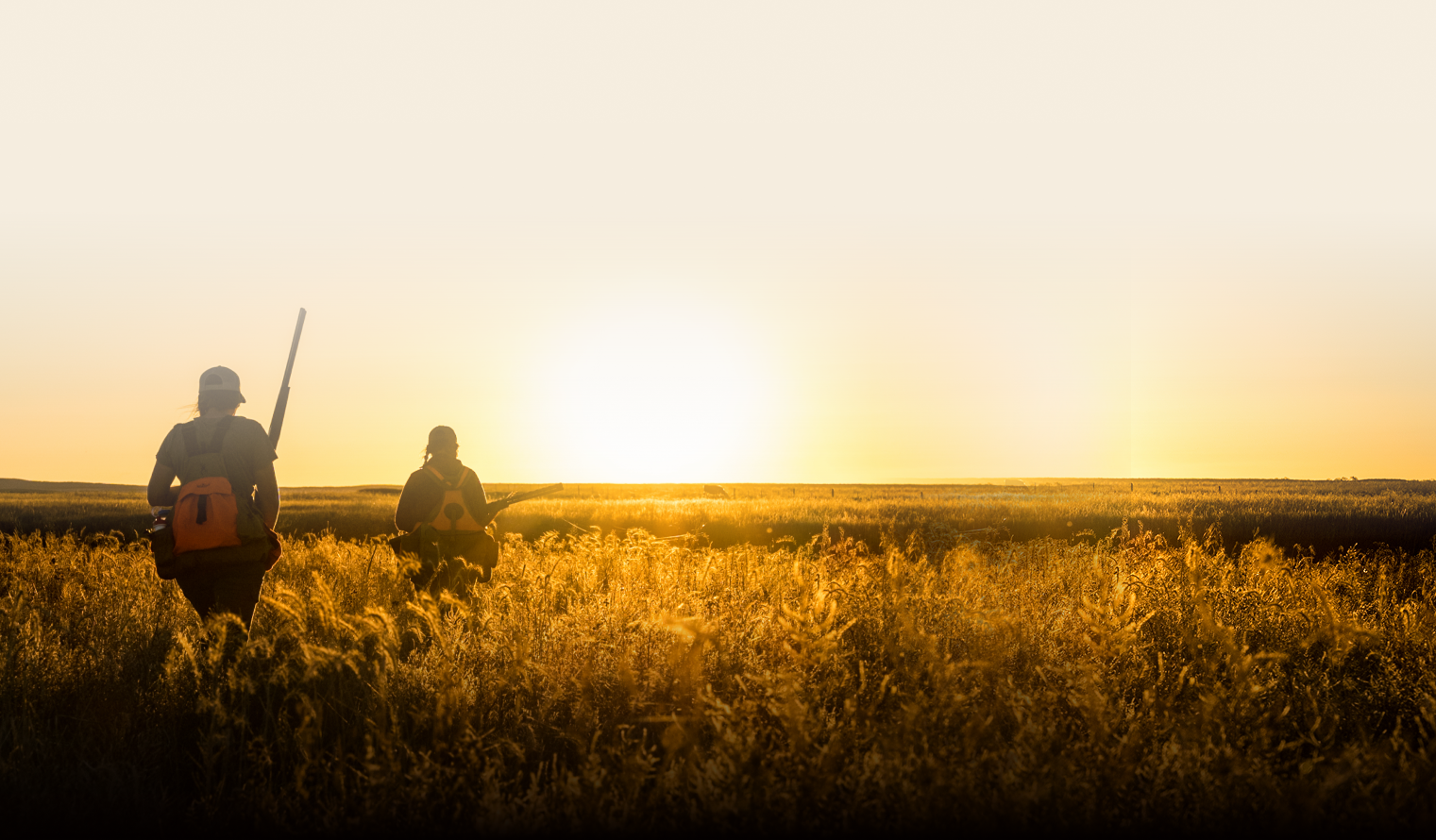
There's something about stepping into South Dakota's big country that changes a bird hunter. Maybe it's the endless rolling hills you can see curve into the horizon, or how the wind carries sounds for miles across the native grass. Or, if you're like me, maybe it's realizing you're not just hunting pheasants anymore — you're hunting the "other" upland game that makes South Dakota a true bird hunter's paradise.
To that end, there's been a quiet revolution happening in our grasslands. Native prairie grouse — sharptails and prairie chickens — are experiencing a historic boom that has wildlife biologists and seasoned hunters alike talking about once-in-a-generation opportunities. If you've been missing out on these birds and only chasing pheasants in South Dakota, this is your chance to experience something special. The roosters will be there — they always are. But the grouse opportunity we're seeing right now represents something that might not come around again for years.
Here comes the boom
South Dakota's 2024 grouse season was remarkable, as harvest surveys indicated that hunters bagged nearly 99,000 prairie grouse — the highest total since 2000.
Additionally, lek surveys conducted this spring on the Fort Pierre National Grassland showed a remarkable 40% increase in displaying males over last year's record-setting survey. In fact, the U.S. Forest Service has been conducting the spring lek survey for 50 years, and this year's numbers are the highest ever recorded. Let that sink in for a minute — we're looking at the best breeding grouse populations in half a century.
While that data is specific to one big chunk — and perhaps the most well-known — of the state's grouse country, it cannot be used as a statewide blanket statement. But here are the facts: winter had little, if any, impact on the breeding grouse population, and a healthy amount of residual cover also made it through winter. In short, when you combine above-average grouse numbers with the exceptional nesting conditions we had this past spring, we're looking at what could be an unprecedented mixed-bag opportunity this fall.
Hunting Big-Country Birds
When I talk about "big country," I'm not just referring to acreage — though South Dakota certainly has that in spades. I'm talking about a landscape that feels fundamentally different from traditional pheasant cover.
Where pheasants duck into cattails or dive into the thick stuff, grouse live in the open spaces that define South Dakota's character. These birds demand different tactics, different timing and a different mindset.
If you're new to grouse hunting, or if you've only picked them up as bonus birds while hunting pheasants, here are a few tips to keep in mind:
Start early: While you have to wait until 10 a.m. to hunt pheasants, grouse hunting starts at sunup. Take advantage of this fact, because grouse are most active in the morning hours. Also, it's not a bad idea to start your morning hunting east- and south-facing slopes, which warm up first with the rising sun.
Hunt the hills: Topography matters enormously, and these birds love the wide-open rolling landscape that characterizes much of central and western South Dakota. While it's tempting to fall into a pheasant routine and head for the thick stuff or the bottoms of long draws, grouse are more often found on ridge tops or the leeward side of the draw. Even better is if you can find an area where two ridges meet and offer protection from roaring Dakota winds.
Regardless of where you hunt, always remember grouse rely on sight for protection. So, stay in the short stuff — your legs, dog and success all count on it.
Follow the food: Sharpies and chickens rely on a variety of native grasses and forbs for food throughout the year, with their diet changing seasonally. If you harvest a grouse, check out the contents of its crop. That'll give you a first-hand account of what grouse in the area are keying on for food. It only takes a minute or two, and it can pay huge dividends as you plan the rest of your hunt.
One often-overlooked prairie grouse hotspot is alfalfa fields. Early in the season, grouse feed there for the forbs and protein-rich insects. Plus, as grassland habitat shrinks, grouse have adapted by feeding more on small grains. In spring, summer and early fall insects are key, but come late fall and winter, grouse mostly eat grains. They'll also turn to berries like chokecherries and serviceberries when snow covers other food sources.
Public opportunities: The best part? Plenty of the state's best grouse hunting opportunities are on public land. For example, the 116,000 acres of the aforementioned Fort Pierre National Grassland are world-renowned for the mixed-bag potential of sharpies, chickens and pheasants. However, the Buffalo Gap National Grassland (600,000 acres) in the southwestern part of the state and the Grand River National Grassland (155,000 acres) in the northwest also have ample sharptail hunting opportunities.
That doesn't include the other tens of thousands of acres of Walk-In Areas and other state and federal lands that hold grouse in the central and western parts of the state. Check out the online public hunting atlas available at gfp.sd.gov to see all the opportunities available to public land hunters like you and me.
Patience pays: Grouse hunting is rarely a flash encounter where you hop out of the truck, jump a patch of cover and find a bird or two. On the contrary, you might put on a mile or two between flushes, but when you find birds, they're usually in good-sized groups, or coveys.
It can be difficult in all the excitement, but once you flush some grouse, watch where they go, especially if they scatter in different directions in ones and twos. It's not a guarantee by any means, but you can usually catch up to the same birds again. Even better, they sometimes hold tighter the second time.
A few years ago some friends from Wisconsin joined me on a pheasant hunt north of Mitchell in the southeastern part of the state. We were all surprised when a half-dozen prairie chickens flushed — so surprised, in fact, that nobody fired a shot. However, after realizing our mistake, we marked where they landed and eventually caught up to them. We shot two, and those beautiful checkered birds were the highlight of our day.
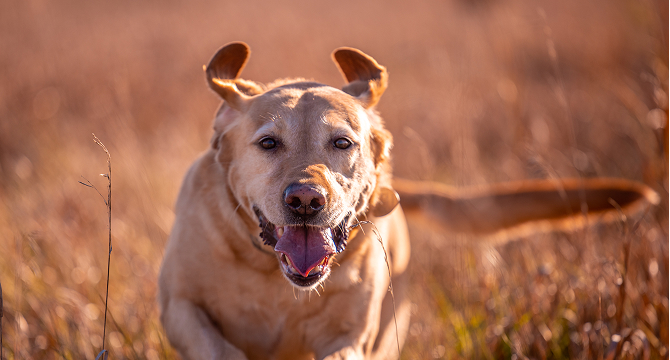
Any dog will do: Hunting the big country is not reserved for big-running dogs like pointers. As long as your dog is in prime condition and suited to handle miles-long treks, it'll do just fine. Remember, you're often walking in ankle-high grass, not busting waist-high cover.
In other words, if you have a dog that can hunt pheasants, it can hunt grouse, too. Personally, I've shot more grouse over Labs than any other breed.
First-aid fundamentals: Carry basic first-aid supplies in your vest to provide emergency field care to your dog if needed. I always carry a Leatherman or a small hemostat in grouse country to remove cactus needles, briars or anything else that sticks to a dog. Also, carrying a tube of EMT Gel or Manuka wound-care salve is an absolute must, along with some sterile gauze pads and a roll of self-adhesive bandage wrap.
It also pays to have a vest with a game bag that doubles as a dog carrier. Remember, you'll likely be miles away from your truck, so plenty of water and a capable first-aid kit aren't luxuries. They're necessities in unforgiving grouse country.
Double-up on doves: Whenever I see a dove, my mind immediately pictures a grilled dove breast wrapped with bacon, cream cheese and a slice of jalapeno. I can't help it, as I think dove poppers are about the best thing since sliced bread.
The state's dove season opens Sept. 1 and presents early season grouse hunters with a different kind of mixed-bag opportunity. If you've spent all morning walking for grouse, switch gears and find a water hole and set up for doves. The fast-paced action will be a great change of pace, and it makes for an exciting, less-strenuous hunt to close out the day.
Doves are notoriously fickle when it comes to weather, and the first frost typically sends them south for the winter. However, if you're seeing doves, take note of where, specifically, and return to that area again with a dove decoy or two. The result can be a wild-game feed of epic, albeit small, proportions.
The Mixed-Bag Opportunity
Speaking of mixed bags, that's truly what makes grouse hunting in South Dakota special, as some of the best grouse country in South Dakota also holds pheasants. What's more, the extended season dates — grouse season is now open until Jan. 31 like the state's pheasant season — mean you can pursue both species simultaneously.
So, get in shape, pack a good pair of boots, bring a dog that can handle big country, and prepare for an adventure that will remind you why you fell in love with upland hunting in the first place. The prairie grouse are calling, and South Dakota's big country is waiting.