
Hunting & Heritage
|
11/04/2026
PODCAST EP. 389: South Dakota Pheasant Hunting and Opening Day Traditions
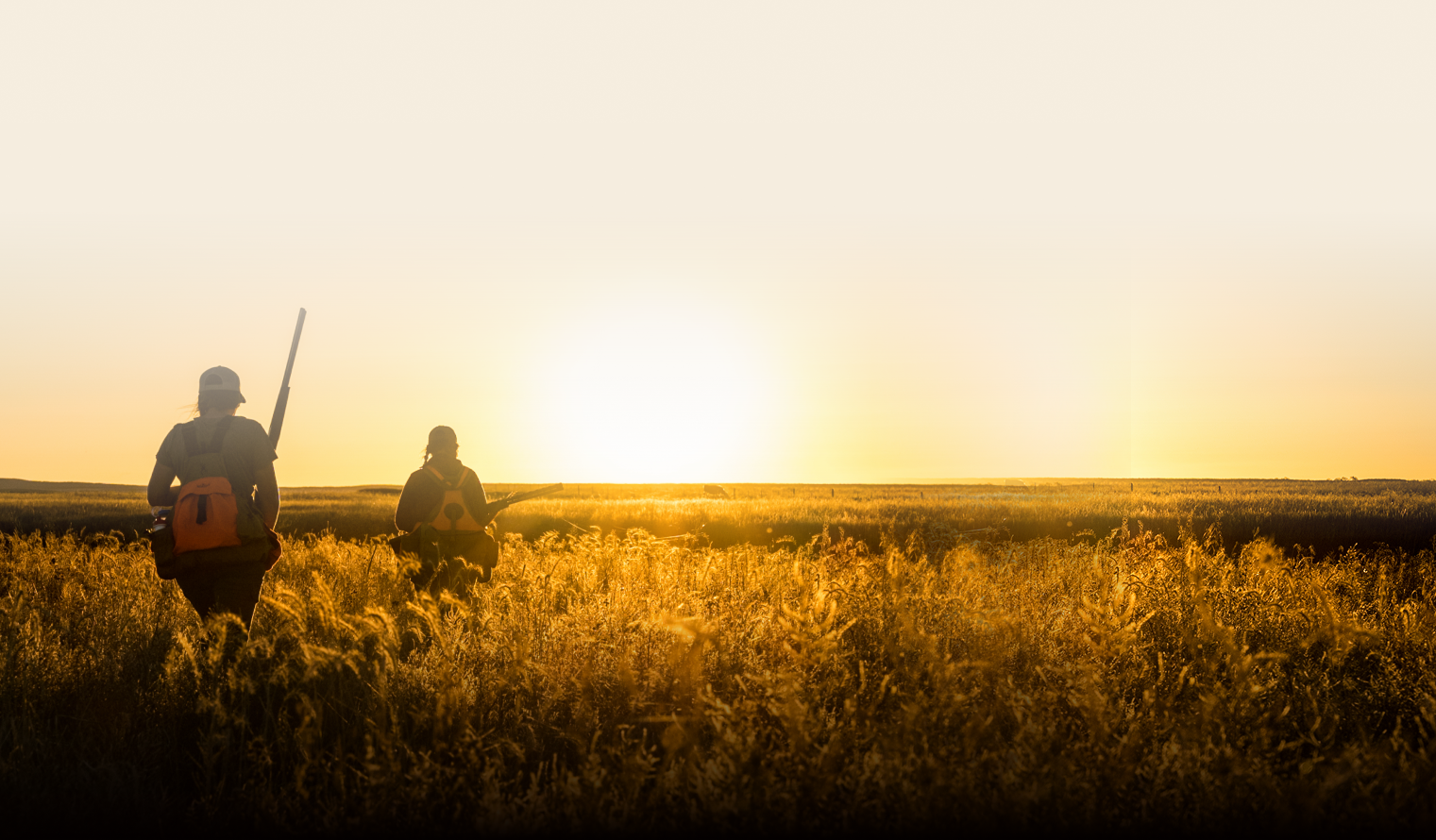
Opening Day in South Dakota is more than a hunt — it’s a celebration of tradition, community, conservation, and bird dogs.
Related Podcasts


Listen & Subscribe:
"On the Wing Podcast" is proudly fueled by Purina Pro Plan.
Episode Description
Opening day is more than a hunt. It is a tradition that connects generations, communities, and the bird dogs that make it unforgettable.
South Dakota's pheasant opener brings hunters together for one of upland bird hunting's most celebrated traditions. In Wessington Springs, Bob St.Pierre joins longtime Pheasants Forever volunteer Darwin Weeldreyer for an opening morning block party that puts small-town hospitality, conservation, and hunting culture on full display.
South Dakota Game, Fish and Parks senior pheasant biologist Alex Solem shares his outlook for the season, explaining how mild winters, nesting conditions, habitat management, CRP lands, and crop harvest influence pheasant populations and hunting success. He also breaks down where to find birds throughout the day, why weedy cover can be productive early in the season, and why December and January hunts deserve a spot on every upland hunter's calendar. For non-resident hunters planning a trip, his advice offers practical guidance on timing a South Dakota pheasant hunt.
Wessington Springs Mayor Ryan Knipfer explains the importance of pheasant hunting to both the economy and the community. Then veterinarian Dr. Casey Duxbury turns the conversation to bird dog health, covering heat stress, hydration, barbed-wire injuries, grass seed awns, eye emergencies, and the preventive care hunters should handle before traveling. Her field-tested advice helps hunters recognize trouble early and keep their dogs working safely.
Follow the show for weekly conversations about hunting, conservation, bird dogs, and upland birds.
Show notes
Thanks to Chief Upland, Irish Setter Boots, Purina Pro Plan, and RuffLand Performance Kennels for supporting our Opening Day - South Dakota video that will come out in autumn of 2027.
View Transcript
Speaker 1 (00:50.706)
Welcome to On the Wing Podcast presented by Purina Pro Plan. Let me set the stage for you. It is 41 degrees on the bank sign across the street. The feel like temperature I read on my phone was 29. The wind is blowing. We are in South Dakota for the best day of the year. We are here in South Dakota for Opening weekend, opening day of pheasant hunting season.
My favorite day of the year since I was a little kid, you know, five years old, nine years old, Christmas morning when you run down the stairs to open up Christmas presents with your mom and dad, and music's playing in the background, and hot cocoa, and and just pure joy. Well, over the years, you grow up and Santa Claus turns out to (any kids in the audience?) ... not be real.
And what has replaced that unadulterated joy for me as an adult is today. Opening day of hunting season, whether it's rough grouse in Michigan where I grew up or pheasant hunting in the pheasant capital of the world, South Dakota. It's my favorite day of the year.
It's where I get to follow my dogs through the fields, spend time with family, friends. It's part of who I am. And so today we are in South Dakota. We're filming the next installment of our opening day film series. So listeners the to the podcast won't be able to watch it until 2027.
Darwin .. Darwin Wheel Dryer, our longtime volunteer in Wessington Springs, invited me out and we're gonna be filming with Darwin. You are gonna serve as my co-host today. So A, thank you on the invitation. B, thank you as being the co-host. We're in Wessington Springs. Tell me about Wessington Springs real quick.
Speaker 2 (03:05)
Well, thanks, Bob, and we really welcome Pheasants Forever, our headquarter partners with our chapter, our leadership to our great community of Wessington Springs and our great state of South Dakota. you're right, it's a big day across the state of South Dakota. You know, this is something that's been going going on for long over a hundred years in our great state. And I think a lot of us just really resonate memories with opening day.
Whether it was with family, friends, yourself back in my days growing up on the farm, you know, we didn't have this elaborate party, you know, is grab a gun, go walk a fence line. You know, and that's what it was, but that was enough. And it was a lot of fun. And but of course we always had family come out and hunt. So it's, it's really a day about tradition, memories, and the nice thing it's really growing into an opportunity for our local communities and our small rural areas in South Dakota to flourish.
And welcome the hunters. Like I always tell you, Bob, we ain't gonna kick you out. You're welcome here. And you know, we just appreciate all of the orange clad that's gonna come and support this community of Wessington Springs. I wanna give a shout out to the sponsors of our opening day series. Our South Dakota film is sponsored by Chief Upland, Irish Setter Boots, Ruffland Kennels, and Purina Pro Plan. So thank you to making this trip to South Dakota possible.
Speaker 3 (04:35)
From Pheasants Forever and Quail Forever National Headquarters in St. Paul, Minnesota, this is Casey Sill with the Upland Newsroom, delivering top stories from the Habitat Organization and across the American Uplands. For today's report, we'll move from a chilly main street in South Dakota to sunny Florida, where Quail Forever has recently struck a partnership to help students find careers in conservation. Conservation Pathways, a nonprofit organization based in Florida, helps college and high school students get connected to conservation careers and professionals.
Speaker 3 (05:04.248)
Through the new partnership, Conservation Pathways students have joined Florida Quail Forever Farm Bill Biologist Nick Reynolds on private properties to conduct surveys, explore the relationship between land management and wildlife, and ask questions about the many routes into a conservation career.
Rebecca Means, the founder of Conservation Pathways, started the organization after recognizing that students interested in conservation and environmental science often lack clear opportunities to explore the field beyond their coursework.
Environmental science can be a very nebulous degree, according to Means, and helping students see the different aspects of environmental science and where it fits in with local issues as well as national and international issues is very important. Based in Tallahassee, the nonprofit works with students from Florida AM University, Florida State University, Tallahassee State College, and local high schools. The program centers on four pillars research, communications, professional development, and nonprofits. Students may participate in field work.
Practice explaining scientific concepts to general audiences, build relationships with conservation professionals, and learn about the organizations that carry out that conservation work. Means said the goal is not necessarily to steer every student toward a particular job. Instead, the program gives them opportunities to discover what interests them, identify skills they need to develop, and learn how their education can translate into a career.
For Means, the Quail Forever Partnership demonstrates the value of giving students direct access to professionals who can share both their expertise and their career journeys. Students gain practical experience while learning about opportunities they might not otherwise encounter. By connecting students with working conservationists, conservation pathways helps turn classroom interest into real-world experiences and shows the next generation that there are many pathways to conservation. So, if you're a student in Florida and are interested in learning more about the new partnership, head over to quailforever.org.
Speaker 3 (06:58.518)
One parting note for the day before I get out of here. My wife Erin and I are expecting a baby girl any day now, which means I'll be away from the office and knee deep in diapers here shortly. In my absence, Pheasants Forever Media Relations Specialist Mikayla Peper, will be filling in for me at the news desk. She'll be taking over starting next week, and I'll catch you all sometime in December.
That'll do it this week. Signing off from the Upland Newsroom for now, I'm Casey Sill.
Speaker 1 (07:23)
Looking out, as I mentioned, we are on Main Street, outdoors, forty one degrees, temperature hasn't gone up. I could tell by the water dripping off of your nose.
Speaker 2 (07:35)
It's South Dakota and you know the wind's gonna blow. but we're tough. We got grit. We got grit.
Speaker 1 (07:45)
Audience wise, we probably have I don't know, a couple dozen. Can we get the audience here and across the way in the bank. On a count of three, I want you to yell rooster. See if we can make the podcast audience hear you on a count of three. One, two, three. Wonderful. Wonderful. Thank you for coming out in the cold in the wind. This is is very fun.
Speaker 2 (08:20)
It is fun, Bob. And and real quick, I know you thanked your sponsor. I wanna just take a quick minute. You know, it took a a big community effort, you know, for what we're doing this weekend and the banquet last night, you know, we've got outstanding sponsors that are always at our side here with our chapter in Wessington Springs. But this morning too, our commerce and our community, you know, I just wanna thank the Wessington Springs area chamber in development for helping and assisting put this on. They did a ton of work. So thank you, Lily and the whole crew.
And then I want to just thank our Main Street businesses for participating. And I'm just gonna run through a couple, Bob, real quick. Springs Food Market, Modest Moxie, Baker's Designs, Sweetgrass, Humdinger, Springs Inn Cafe, the True De Coat, and Pin Twister's Bowling Alley.
And a special thank you to the Wessington and Springs FFA group who's doing their breakfast fundraiser so they can raise money and go to national competitions and
they're rock stars, those kids. And that program I would put it up against anyone in the country.
I wanna thank them for serving breakfast. Wanna thank Springside Furniture for what we're sitting at today. So they they donated this so we could have a good home to set our rears on and then thanks to Holden Jackson for helping with our sound system.
Speaker 1 (09:34)
And whoever brought the heaters, thank you. all right. So the the game plan today, we have Alex Solm, the lead pheasant biologist for the state of South Dakota, South Dakota Game Fish and Parks. We're gonna talk to Alex. We have Dr. Casey Duxbury, veterinarian at Prairie View Veterinary Clinic in Wessington Springs. Thank you for the stormy cromer. Did you know I was from the upper peninsula in Michigan? You did? Okay. So we're gonna talk about keeping our bird dogs safe on this opener because it may be forty one. The clock still says the back side still says forty one. But it it is supposed to get to close to 70, maybe even over 70 today. And that's gonna change some things for our bird dogs. So we'll we're gonna talk about that. And then we have the Speaker 4. I don't you might be the first Speaker 4 I've had on. I've had some senators, maybe a governor, but you're the first Speaker 4.
Speaker 4 (10:35)
Well you went backwards.
Speaker 1 (10:37)
Ha ha ha. We have the Speaker 4 of Wessington Springs, Ryan Knefer. I say that, right? Yes, sir. All right. So that's our game plan. I want to thank once again Purina Pro Plan, the presenting sponsor of On the Wing Podcast. I'm proud that Purina has always supported our conservation mission at Pheasants Forever and Quail Forever. And they're the presenting sponsor of On the Wing Podcast. My pups have always eaten Purina Pro Plan, not just because Purina supports our habitat mission, but because Purina Pro Plan was created for the working bird dog like yours and like my little Gitchie. It was made, the recipe was created for working dogs like ours. Can learn more at Proplansport.com.
All right, Speaker 4. Tell us about what opening day means to Wessington Springs. When you when you think about this weekend in this community. So let's start what's the population roughly of Wessington Springs?
Speaker 4 (11:44)
Uh, just under nine hundred. Nine hundred.
Speaker 1 (11:48)
And how many people will come in for this weekend?
Speaker 4 (11:52)
Roughly. Probably half of that.
Speaker 1 (11:54)
Another so it'll be close to 1,500 people? Yeah. Yeah. Yeah. And what what does that mean to Main Street when when that many people come to the community?
Speaker 4 (12:06)
Well you you said it yourself, it's like Christmas. you know, the the businesses get twice as many people, they get to show what they have and they they welcome it. Yeah. It's huge.
Speaker 1 (12:22)
What about just culturally? Like when I think about growing up in the upper peninsula of Michigan small community, when it's deer season, like kids come back home. Is that true of what happens for pheasant season here?
Absolutely, absolutely. It's like a holiday. Yeah. You know, ki family comes home, they don't normally come home. You know They that's a yearly tradition and you see people either you don't you only see this weekend. Then you don't see until next year.
Any any particularly fun stories that come to mind when you think about pheasant traditions in the in the community? Mm the f pheasant banquet is you know it's a big deal community wide. I mean the Pheasants Forever chapter banquet, yeah. Yep, yep. I mean I'm a farmer, we harvest and we make sure we're done into town before that. And then you know, I it's just non resident hunters that come, you
Speaker 1 (13:21.534)
they come year after year and they get to be almost like family, you know. You expect to see them. Almost like family. So the friendliness but not the infighting. Yeah, yeah. Right. Correct. Correct. Correct. so you shut down Main Street today. You've got heaters. it's a little bit windy and a little bit cold, but we still have a nice audience of people. y
And all the banners in town. It says rolling out the orange carpet. Do you envision that this will take off and become a tradition for next year? Where are you going to try to replicate having a kind of a main street breakfast and gathering? I I hope so. I I I I it looks good. It's a good chance for the businesses to show what they got. It's good good for the development corporation, the FFA kids. It gives them a chance to raise a little money. And you get to stand around and visit.
Yeah. Well, thank you very much for rolling out the orange carpet to Pheasants Forever. This is extraordinarily flattering to all of us and the community showing up last night, Darwin, at the banquet. I mean that two hundred plus people, right? Yeah. Yeah, it was a beautiful crowd, big crowd. And you know, that's what I love about small town USA, you know, and we need to gather and support.
You know, and that's been through this community, through disasters, tornadoes, whatever. You know, it's you stand up and you stand up proud and we should. You know, we we need to be proud, you know. This is this is heartland to me. Yeah. You know, and I hate to see communities, you know, continue to maybe dwindle a little bit, but this is a resilient community. It's been through a lot with fires, tornadoes, and we just they just keep coming back. And I think that just talks a lot about the spirit.
Tell us about the tornado. I've seen bits and pieces of that and i it w were in the n right next door to the town newspaper and there was a story about the tornado. Yeah. Tell us about that. Yeah, Ryan was at 2014, right? Yep, yep, yeah. And maybe Ryan can tell better than me, but you know there was a one of those deals it
Speaker 1 (15:35.936)
It started in the southwest, I believe, Ryan, and basically come across the Gulch and it just kinda clipped up here where the American Legion was. That's not the Legion that was there in two thousand fourteen. Okay. And it kinda took the what I would call the east half of town and just kinda cut a cut a strip through there and it was pretty significant, you know, a lot of homes lost, a lot of people rebuilt. we lost some business opportunity there, but a lot of people
Built back too. And again, you know, that's that's in a small town, that's because you love being here. Yeah. They're you know, they're they know the risks they're taking. And the grit. And the grit. You gotta have some grit. You know, let a little water run off your nose. It's all right once in a while. I got I got here in the dark at I don't know, 620 this morning and all the banners on Main Street were sideways. They're the beautiful mums were tipped over everywhere.
I came I came to the where we're sitting and like are we doing this outside? Yeah. Why wouldn't we? I'm like, okay. Yeah. Yeah. It's like Bull Durham. Sometimes you win, sometimes you lose, sometimes it rains. And sometimes in Wessington East Springs or in South Dakota, it blows. Show goes on. It blows a heavy wind. One more question for you, Speaker 4. you talked about when we were doing a little video work, you own a hotel. Yep. What's the pheasant
season mean to your business in terms of you know without it, what would you know, wha how's it fill the gap for ya? without without the non resident pheasant hunters and it w wouldn't be very possible to keep it open. Hm I I mean it it's it's a game changer for the motel. it keeps the lights on.
And Ryan, I think I could add, you know, when I drive by, you know, I'm back about every weekend during the hunting season, you know, and such. But, you know, Bob, this isn't just opening day. You know, hunters come through here till the end. Yeah. You know, it's very common to drive down Main Street in front of the cafe or by the motel, you know, on January sixth when you think it's cold today. It's colder yet.
Speaker 4 (17:42.488)
For
Speaker 1 (17:56.302)
And they're there, you know, and that's pretty impressive to, you know, so it's not just opening day. This is the whole pheasant season opportunities. Well, that's a wonderful transition by my co host. We'll talk about the entirety of pheasant hunting season. We'll make the jump to Alex Solem, the lead pheasant biologist, is that accurate? Senior pheasant biologist for the state of South Dakota. You're like, I mean, you're the top of the top.
Senior.
Speaker 4 (18:26.312)
I guess. you know, with great power comes great responsibility, right? Think that Superman said that one day sometime.
The Superman of Pheasants in the Pheasant Capital of the World. Let's set the stage. What will hunters find when they enter the field today? Give us your forecast as we jump right in.
Yeah, we're super optimistic about the bird numbers. I mean, we're really coming off of essentially three really mild winters when it comes to hen survival and being able to put hens in the spring to nest and get net good nest success. We were a little droughty this year, which
I always say pheasants, they don't mind a drought, they just hate a severe drought. Or they like it dry, they just don't like a severe drought. So but it usually comes down to operations, how we're managing our grasslands, all that sort of stuff, what type of cover we can put out there. but all in all, we're super optimistic. Had heard great reports from just a ton of landowners about man, I'm seeing a lot of pheasants this sum this summer, seeing lots of broods, decent brood sizes, all that sort of thing.
you know, it's gonna depend on where you go. Obviously, drought impacts the landscape kind of differently. depending on, you know, what rain you caught and and things like that. But overall we had a super mild spring. We had near normal temperatures, near normal precipitation, which are other two variables that go into production. had a really mild June, minus a few storms, but you know, they're they're we'll just say pheasants are gritty too. Yeah. and then going into August and September.
Speaker 4 (19:58.778)
really the only thing that's probably gonna limit success today is just how much corn how many corn and beans are coming out. I mean, that's one of the things with opening weekend is it really depended on crop progress. A lot of the success. I mean, there's birds out there, but they love to hide in the corn, they love to hide in the beans. It's just extra cover. we had some rain, two, three weeks ago that kind of delayed harvest a little bit, but guys are going at it. You know, they're
They're really pushing pretty hard to get corn and beans out. So I'm looking forward to it. I got a twelve year old that this will be his first legit hunting season. He doesn't have to carry his B B gun behind me like he has the last ten years. and I couldn't I couldn't be more excited for it. Yeah.
Hey, you just aged me. fifty years for me, Bob, since I was a twelve year old youth. Fifty fifty years ago would have been a big day, like you said, through the eyes of a kid. Yeah. You know, watching what was going on. Of course it's a whole different era. But yeah, so happy anniversary to your kid for me. So
shit's first. My bad.
Speaker 4 (20:59.566)
Yeah, yeah. No, and I and I was telling I was talking to Bob earlier and it's you know, I remember coming back out here. I was fortunate enough. I grew up in southwest Minnesota, but my dad was from the Huron area, which is about forty miles north of here. So he lived up there. I didn't miss an opener. I think I've missed one since I've been able to hunt or even just tagged along with him. And I remember just hopping in a a single cab, old Ford or Chevy, hanging out with the old guys that are blocking, just getting
Absolutely sugar crazy with Snicker bars and Cokes and I mean it was the best time of year. And th those meant like I never remember how many birds we shot, you know, whether or not it was a good year, whether or not it was a bad year. I just remember listening to Vikings games, them maybe saying a few choice words because back then they weren't really that well, not that they're good now, but five and let's go. No, yeah, so it was just one of those things where
That's a key I
Speaker 1 (21:50.998)
Are you predicting a Super Bowl?
Speaker 4 (21:58.623)
It's it there's just so much that that comes with it. It's not just the harvest, it's the connection with the people and yeah, opener's just it's like Christmas, like you said.
W your twelve year old, what's your twelve year old's name? Kellen. Kellen. What's Kellen excited about? What if if you were if you were speaking for Kellen right now, which you I guess you are. Yep. What's Kellen jacked about for opener today? When he gets to carry a shotgun behind you, you have a two year old lab.
Alan. Yep.
Speaker 4 (22:25.378)
Yep, yep. I got a two year old yellow lab your lab's name? Maddie. Maddie.
Maddie. Yep. So Kellen gets to go behind Maddie with a shotgun for the first time in a matter of hours. Yes. What's Kellen excited about?
That's a really good question. I think the mere fact that he's not stuck blocking, you know, as a kid and all that sort of stuff, especially younger, you're like, okay, you gotta go stand by your papa. Dad's gonna go out there and shoot all the roosters that get up in front of it. So I think he's just excited to go out there and walk around. I'm sure there's gonna be some complaining. I mean, I remember those days as a six-year-old. The best time I ever had with him, it was like a
Six inch snowstorm blow s the s the wind's blowing thirty miles an hour. He's got an orange coat on and I got a picture of three roosters with my older lab and him and the smile just erased the weather that we were going through. And yeah, but I think I think probably just not being able to block, being with his friends and family, all that sort of thing. We got some buddies of his that are coming, some family friends and just just enjoying the day.
That's fun. you know, we we're making a lot about opening weekend for good weekend. Good reason. It is like Christmas for many of us, sounds like for you too. Yeah, definitely for Darwin. but the season goes a heck of a lot longer, actually, as of four or five years ago. Goes through the end of January. Coach our listeners for you get the two five day period. How would you use that if you're listening from
Speaker 4 (23:55.822)
Correct. Yep.
Speaker 1 (24:00.052)
Say Escanaba, Michigan. Sure. One of my childhood friends is listening. I want to go to South Dakota. When would you coach them to go?
Yeah, you bet. So as an on resident, you get two hunt two five day hunting periods. much like you said, you can use those five or those two five days as however you want. So you can do back to back for ten days. You can split up five days now, flip split up five days later. You know, if you're coming out opening weekend, obviously you're gonna put your first five days starting today, going into I can't do math. It's too early. Wednesday. That's not even math. That's how early it is.
But you know, when Tuesday, Wednesday of next week. if you're unsure of when you're gonna come back, I always tell folks to put their last five days to the last five days of this hunting season. Cause you're always able to move your dates up. You just can never move them back.
Is that an airplane? It is. It is an airplane. Hunter's coming in.
Yeah, probably. so you can always move them back, or you can always move your your dates up and change them. You just can't move them back when they're passed. So again, kind of one of those little tips is it defaults the last five days of the season, and you can, you know, usually go whenever you you feel right. So we have a you can buy as many.
Speaker 4 (25:12.61)
ten day hunting periods or two five day hunting periods as you want. So come back as many times as you see fit. And we have a plenty of people that do that, especially from the surrounding states that, you know, they're they might only be an hour or two from South Dakota, they'd be a weekend warrior, then it works out for
If you were gonna pick your favorite two five day periods, I know what your first one would be. Tell our listeners.
Yeah. Well my f my utmost utmost option to come would be that first week of December. I absolutely love the first
Everyone's shaking his head in affirmation. Week of December.
Yeah, you better cool. You usually don't have to worry about the dogs too much. Obviously, you're giving them water and that sort of stuff, but the heat's usually not an issue. All the crops are out. Our deer seasons are pretty much done. and by then we usually have a little bit of snow on the ground or maybe a skiff of it, and the birds are, you know, usually in the cattails. You don't have to go searching for You know exactly where they're gonna be. and it's just one of those things that they're starting to pile up too. So like instead of the
Speaker 4 (26:14.85)
five six bird flushes that you maybe have on opener, you're getting into a cattail slew or five hundred bailout, you know, a thousand birds bailout. Yeah. yeah. So that's great. I mean, I do think opening weekend is something that everybody should experience at one point or the other. So whether or not put it on your bucket list, you gotta see the orange carpet as it comes out. I remember as a kid, my dad was a cop in Huron before we moved to the sheriff's department and
We'd go drive around at about five o'clock in the afternoon and we'd go to the airport and there wouldn't be a single jet in the entire airport. He'd drive me back at eleven o'clock midnight, you know, as an eight or nine year old. We were just hopped up on Mountain Dew at that point trying to stay awake. But the whole jet field would be just absolutely full of jets. So I mean it's one of those things where you gotta be here, you gotta experience one time. But December and I honestly I love the January part of it too. I was I was
What's like instrumental in trying to get it pushed back just for a little bit of opportunity. Okay. It came from me and another coworker at the time, the idea of it, just give a little bit of extra opportunity. And we were talking about earlier, or actually I was talking to a a guy that I met in the the coffee shop here, where there's a light switch in the middle of January where the days start getting a little bit longer. You usually get a kind of a January thaw, and those birds go from being super wild to almost flushing back at your feet.
So if it were me, I'd come late. It's pretty predictable on where the birds are gonna be. and you'll really if you're not gonna get if you're a good shot, you'll be great, but you're sure gonna see a lot. Yeah.
Yeah. I th I think Bob, the only thing I would add, you know, is just hunting pressure too. Yep. Yeah. You know, your hunting hunting pressure backs down a little bit. And like Alex said, you know them birds are cagey. They know that. They feel pressure. You know, and that pressure starts to drop off, there's a great opportunity to people to come. Non residents hit our public areas and you know, you just don't have as much hunting pressure to
Speaker 4 (28:13.662)
a little fact out there. So the state of South Dakota in the month of October, we shoot more pheasants than any other state combined. And that's still so for like the two and a half weeks that we have in October, the first three weeks or first three weeks of the season, we actually harvest more pheasants in that short period than any of any other state for the duration of their season. Yep. So that's kind that kind of speaks to boom
Was that a mic drop moment?
Yeah. Boom. Yeah. We need a plane to fly over. No, that kind of speaks to what he's talking about with pressure is we get a lot of pressure the first three weeks. Obviously it's nice weather, that sort of stuff. You got family coming back to things like this, but you know, there's still plenty of birds. It just shows our harvest kind of goes down in January. It's not because of lack of pheasants, it's just because folks kinda just get
different mentality. They're going hunting deer. Maybe they're gonna start ice fishing. So there's plenty of opportunities for folks out there to pursue.
You you talked about this a little bit in the beginning, but maybe more directly, what makes South Dakota the pheasant capital of the country? What are the elements that result in more birds being harvested in the two plus weeks of October than any other state can
Speaker 4 (29:30.296)
Yeah, we have honestly, we have the right just habitat on the landscape. I mean, pheasants love an agricultural type landscape. I mean, they're not earthworms, so they need, you know, grass and that sort of stuff to nest in. but we have the right mix of crop ground, corn, beans, wheat, millet, that sort of stuff with pasture ground, with CRP, all that sort of stuff. Also, it comes back down to our climate. We just have the right climate for it. All right. We have the great.
a a really good growing season. Or we have we have some hard winters around here, but generally speaking, like, you know, that white death that comes in, it also it also provides us a lot of moisture for the spring. get the grass grown and that sort of stuff. So we're not super cold, we're not super hot. We just kind of have the right, you know, thing for that. But I think most importantly it's just our culture. Like I said, there, you know, we've been talking about there's banners on every single business. Welcome hunters coming in,
Everybody gets something different from pheasant hunting, whether it be the actual harvest, the connection, whatever. and it's just ingrained in us and it's something that we don't want to let go.
Breaking news. Forty two degrees now. We're one degree
Hurry up. You can hear my teeth chattering.
Speaker 1 (30:45.966)
okay, last question, then we'll we'll transition to our doctor. Sure. Are you a doctor? I wasn't that clear.
No no, I'm not a doctor. I am a master I that was enough schooling for me. I was like, I'm ready to pay off these loans.
With you. all right, so 835. People will be going out here shortly. Obviously this will come out afterwards, but we have an audience of people that will be going out on opening morning. Coach us on where we're gonna find birds at 10 a.m. And then also for some of the working stiffs out there, the golden hour, tell us where we're gonna find the birds at the beginning and at the end of the day.
You bet.
Speaker 4 (31:29.63)
So you're making me give all my tips, my tips and tricks. I noticed I kinda feel dirty. I don't know. No. so early in the season, the best places that I like to go is that what I call early successional habitat, and that's kind of a very biological term for go to those weedy areas. you know, they're they're not quite adults yet, all those young birds, so they're still looking for some protein, they're still trying to eat some bugs. There's a lot of right now. Well, we haven't froze yet. Well, there's a picture dare.
Bugs are still alive right now.
And it's shaking her head.
I'm really hoping that it c we get a frost to kill all the fly No. No, we went on a walk the other night and my boy and I we got absolutely eaten alive. It stinks. But going to that weedy habitat looking for they're eating weed seeds, they're eating insects, all that sort of thing. They're moving around pretty easy. So early season go to there. You don't have to hunt the thickest stuff. You don't have to go into the cattails, anything like that, hunt the early successional habitat. Can't get out on an opening morning or at ten AM, don't worry about it.
He knows that.
Speaker 4 (32:28.438)
Mm-hmm. like I said, there's usually some crops in. Sometimes those birds get smart and they head right to the corn and you know, they hang out for the for the duration of the day, whether it's hot or not, they get some shade. At golden hour, hunt the last two hours of the night. Those birds will move from the from the crops, the corn, back into their roost habitat, and then you just watch where they go and go after So just because it's you can hunt from ten to sunset doesn't mean that you have to hunt from ten to sunset. You can go in there the last couple hours and you'll be really successful.
last question will transition once again. Folks that come in here for the first time, they wanna be legal, they don't wanna break the law, they don't wanna do anything inappropriate. What are the common mistakes that we can put out there to for people to be aware of and
Yeah, I mean early season we always have those late hatching birds and and young birds. So just be sure what you're shooting. If there's you know any question, don't pull the trigger. You don't want to mistakenly shoot a hen, you know, anything like that. Not only are you gonna get a grief from a lot of the folks out there, but you're also gonna get I think a hundred and thirty seven dollars and fifty cent ticket and nobody wants to w wants that.
so just be sure of it. Make sure you see the red, make sure it's a rooster here, cackle, that sort of thing. it happens every opener. You just get laid hatching birds. other than that, I think if you're hunting public, just know steel or lead shot, what's capable of it. So if you're hunting crep ground or walking areas, you can shoot lead for pheasants. If you're hunting a state or federal owned property, make sure to shoot steel. Yeah.
and you never lose that hand label.
Speaker 4 (34:04.596)
Either. No, you don't. You don't. You get it. Yeah, you get I know yeah, I I think the statute of limitations is over No, I'm just joking. but yeah, that's the same thing is you you you get it for the rest of your life and knowing a lot of guys in this Springs area, if you do something wrong, they're not gonna let you live it down. I know plenty of people north of here that ranch that there's still stuff from when I was six years old, eight years old as a kid that I still get crap for. So
Well we forgive yeah.
Yeah, thank you. Appreciate it. Makes me feel better.
another thing to keep in mind is to know where you stand, know the public land and private land boundaries. And in that regard, I want to thank Onyx Hunt for being a sponsor of On the Wing Podcast. We don't hunt just simply for that perfect picture for social media. With Onyx as our guide, we do hunt for that perfect walk behind our bird dog, the smell of burnt powder and the
Buddy right alongside us. It's opening day where the the best time of the year means we're spending time with our family, our friends, and our bird dogs. And the traditions we carry forward are the ones we hope somebody carries on after us. Time out here has a way of putting everything else in perspective. The best days rarely end up
Speaker 1 (35:31.52)
At the end of a tailgate or in your vest. They're the stories we tell for years about unforgettable dog work. Hopefully, we have some of that today. My two-year-old winter has something to say about that. We'll see. the people who were there before us and the ones long after the season ends. To Onyx Hunt, here's to the hunt. All right, speaking of bird dogs, we got Dr. Casey Duxbury. Did I pronounce that correctly?
Yes. veterinarian at Prairie View Veterinary Clinic in Wessington Springs. All right. A lot of our success today has nothing to do with, you know, where we go. It has to do with our dogs' ability to use their nose and put it all together. Is there anything that you think will stack the odds in our favor when we think about our bird dogs and putting them to work today?
I think a lot of it goes into the work that you do ahead of coming today. So I don't think anyone would jump off the couch after six months and go run a marathon. I don't think we should expect that of our dogs either. So they are the athletes in this situation. so we need to feed them appropriately. I love the Pirina Pro Pro Plan plug. That's one of my favorite foods to advise to our hunters to have their dogs on.
but exposing them to things that they're gonna be, especially with young dogs. If you have any ability of spending time ahead of today where we have bird brain on and we're not really thinking about anything else to train around barbed wire fences, that's what I would advise the most. That is our number one issue that we see coming in as barbed wire lacerations. I I can speak for all of us at Prairie View. We have two emergency seasons that are very heavily heavy during the year.
it's calving season for our farmer rancher producers and then we have opening we have pheasant season. So we see a lot of dog calls, most of those being lacerations. So if you can train them to slow down, hesitate, go under the wire rather than run through. I think a lot of dogs are used to training around high tensile wire with no barbs, so they can run through that, maybe take a shock and keep going, but the barb really does slow down.
Speaker 1 (37:45.78)
So is carrying a stapler in your hunting vest a good idea or is you do you have the potential to do more damage than g
Good. I f I I can see both sides of that. I mean, truthfully it depends on the severity of the laceration and what you're seeing inside that cut. so a lot of them are just superficial abrasions. Biggest thing is cleaning that out with clean water. if we have a bleed applying pressure and things like that. if you're medically inclined, 'cause we have a fair amount of physicians and even veterinarians that are out here hunting today, by all means if you got ability to staple and do that securely, then
By all means go for it. But for your average hunter, I would advise at least a quick consult just to see if this is something that requires more clean out and deeper repair. We see a lot of seed heads that are embedded down deep in those wounds and closing those early without a good clean out is gonna create more problems down the line for you guys.
Speaking of seeds and yeah, I'm thinking about a tailgate check. Yeah. You get back from the field and you want to check your dog before you put in the kennel. What sort of things should you be looking for in a bird dog after the hunt?
biggest thing is probably hydration level. So if your dog is working really hard, obviously they're gonna be panting because they're running hard. but a flat wide appearance to the tongue, thick ropey saliva indicates we need to get more water into these dogs. We need to assess hydration. the paw pads, look for any cuts, scrapes to those. between the toes, looking for thorns.
Speaker 2 (39:24.756)
any little stickers, those can cause problems down the line. And then looking in our armpit and our growing areas, those are where we see a lot of our lacerations. even from corn stocks, especially as we go into December and January, those they retain some moisture and they freeze and we have a lot of lacerations from those primarily. So those would be the big things that I would check. And then
Yeah, check ears, things like that. If your dog is sneezing and doing a lot of things like that, we may have a seed that has gone up the nose. Seen that a few times.
So I think if I could bot real quick too, Casey, you know, I see a lot of video about eyes. You know, we get a lot of pigeon grasses in some of these food plots, you know, that aren't roundup, you know, that are roundup resistant. So or non roundup resistant. So a lot of pigeon grass, you know, and it's at that, you know, twenty four inches high, right in their eyeballs. You know, and I see that a lot too. So
Yeah. And in our world, eyes are an immediate right now emergency. Those can go from bad to a nightmare overnight. So if we have excessive tearing, cloudiness to the cornea or the surface of the eye, or if our dog is squinting, that's a call me right now emergency. It's a not a wait overnight and see how it looks in the morning.
Speaking of call me right now, right? Like you I'm assuming you have kind of Monday through Friday hours, as most small town vets, but then there is the emergency. So coach folks that are traveling to small town America, small town pheasant country, small town quail country, they have an issue, an emergency with a bird dog. How do they get expert kel care from a veterinarian?
Speaker 1 (41:06.782)
Yeah, the things they can do in advance before they travel and things that they can do when, you know, cr a crisis happens.
Yeah, absolutely. I think one of the first and foremost things is making sure before you come your dog is up to date on their vaccinations. We really want to make sure all dogs that come to this area or doing any any hunting out on public land with any water have their leptospirosis vaccine included that is shed by deer and other wildlife into our water systems and that can cause some really, really severe sickness in our dogs. So doing that ahead of time.
Having your your primary vet's contact information in your in your bag as well. So if we need to send records, your dog's on medication, you get out here and you forget it, that's a quick h phone call from me to them, get confirmation of dose, we can get that meds for you. making sure, yeah, you bring those medications and anything like that. But if you have an emergency out in the fields, if you're prepping to come, find where your closest veterinary clinic is.
and ask about their after hours emergency availability. Prairie Vet cli in our entity has five clinics and there are seven veterinarians. we take call 247, 365 and we we do two primary clients and then emergency clients that are from out of state, especially our pheasant hunters, we really like to take care of you guys while you're here. So for for our clinic I can speak everybody's a little bit different on how that operates.
If you call any of our primary clinic numbers, follow the prompt. I believe it will be press one to forward to the veterinary on calls phone and then follow that prompt and then you'll speak to one of us directly. If we don't answer right away, sometimes we're out doing cattle work, leave a voicemail. Okay. And then we'll get a hold of you as soon as we can.
Speaker 1 (42:58.84)
So today, although it is still forty two degrees at the moment, it is supposed to be seventy, maybe breaking seventy today. Not as bad as it was last weekend, where, you know, in some parts of Dakota, yeah, southern Minnesota for opening weekend for residents of both states on i you know, opening weekend last year or last weekend broke ninety in some places. So
That's extremely dangerous for bird dogs working out. What should we be aware of if it's seventy degrees today? Is that an al alarming temperature for you or are there things that we can do to make sure that it doesn't become a crisis?
I say that it is it's it's not an alarming temperature for me. If we are gonna be in the eighties and nineties, that's where we get concerned. The dogs are just as excited as you guys are to be out in the field. ways we can mitigate that heat stress in our dogs is to take breaks. I mean they're not going to want to, but you have to lead the team and force a timeout. Get them to
Darwin, you're gonna have to make me take a break. We'll take a break. Treat me like a bird dog today, B Darwin. We'll take a break. Sorry.
Absolutely. Take breaks, water breaks for everybody, people and dogs included. if you have enough dogs where you can rotate and give them time off a little bit here and there would be great. But just monitoring how they're acting, basically that wide, wide appearance to their tongue, excessive panting, thick, ropey saliva, that's where we need to and in your bags, that's one thing I'd encourage every hunter to have is a good rectal thermometer. Take that rectal temperature on your dog.
Speaker 2 (44:36.35)
If we're upwards of one three point five or higher, that's where we really need to think about active cooling. no cold, cold water. That will be a shock to their system. But into the armpits, groin area, paw pads and the belly, some cool lukewarm towels, things like that, and then get in the AC. And if we're if we have higher temperatures than one five, one six, that's where our phone call to our veterinarians is gonna be helpful.
talk about the the tongue's importance for a bird dog and how they sweat compared to
Yeah, so we have sweat glands throughout our entire body. Our dogs do not. They really only sweat through their paw pads. And so they use panting as a way of active cooling to exchange basically temperature in the environment. So their tongue is doing a lot of work for that for them to help cool them down. There's only so much panting that you can do to cool off when it's ninety degrees outside and you're running full bore. So I've
Coached to it, you know, part of the water is hydration, but part of it is to clean the mucus off the tongue to keep the the cooling ability as maximized as possible. Is that accurate?
Yeah, I would say so because we're using evaporative cooling in that instance when you're moving air across a wet body surface such as the tongue. So to provide cool water to the tongue is gonna increase that ability to cool. Cool.
Speaker 1 (46:05.344)
All right, Darwin. That's some tough act to follow. Lot of smart right We're rounding third. We've had the Speaker 4. We've had w what the the Superman of Pheasants in the Pheasants
There.
Speaker 4 (46:21.068)
I said senior. I mean it starts with an S but yeah.
We've had a doctor. Now we have Darwin. Tell us the game plan today, Darwin. What eight fifty may or may not be at your field at 10 a.m. but somewhere shortly after that, what's our game plan? Where are we going? I'm following Alex's advice that he gave earlier 'cause he's smart, but I think with this wind today, you know, and it was cool overnight, you know, these birds are gonna still be tucked into some cover. Look some for some field edges.
You know, they just love to get out of those edges, hit some food throughout the day. You know, it's not just morning, it's not night. They'll work themselves out, feed a little bit, and then they're just gonna go back to that cover today. I think the wind's supposed to be in that twenty pretty much all day long. So I think if it looks it looks like it's got a pheasant in it, it's probably gonna have a pheasant in it today. But yeah, you know, these field edges and even the standing corn, you know, a lot of times they're just that buffer edge.
Them pheasants aren't very far into that corn sometimes if they haven't been pressured, you know. They may be 30 rows. So, you know, work some edges. we're gonna work grass. it's gonna be fun. You know, Alex said it, you know, the numbers in Utah. I was talking into sweet grass earlier this morning. a couple guys was combining last night and he said, It's been a long time. And I thought we had birds last year. And and I said, Well, I thought our birds numbered last year. He said, Yeah, but there's more.
And so I think, you know, hunters are gonna hopefully find good success today. you know, at the end of the day, you know, you don't go to the river always and catch a limit of fish. You don't go to your tree stand and shoot a one sixty deer every year. You know, enjoy the experience. Yeah. You know, suck in the tradition, your memories. that's what opening weekend is all about. So, you know, make it an experience and you know what?
Speaker 1 (48:20.61)
You get one of them cagey guys in your bag, you know, that's a good day. Yeah. So this property is near and dear to your heart. Yes, sir. Tell us about where we're going and what you've been doing to make it a pheasant Valhalla. Yeah. you know, it's got a story to it, for sure. You know, this is family property I was born and raised on. my parents passed.
My brother and sister and I, you know, we looked at it as an opportunity. You know, we weren't the ones that put the blood, sweat, and equity and risk into it. And I'll say that to everyone, you know,
What we're doing out there is what I believe our parents would appreciate. You know, and my dad was very clear about what he believed believed in and didn't believe in and you know, diversity on the landscape. you know, he's just very, very much believing in, you know, prairies meant to be prairie, things of that nature. And you know, it's a special place, but after they passed, you know, I thought how can, you know, I create something that
kind of showcases our history on that family farm a little bit and keep that tradition close to us. And it's allowed us and our family and friends to make lasting memories for quite a few years now. So we've been at this about fourteen years hardcore. and it's really a piece of property that speaks to the conglomerate of organizations what it takes to put landscape out there.
USDA, you know, the Federal Farm Bill with C R P, you know, making those programs available. State of South Dakota, I worked with the Game Fish and Parks Department on their program for some woody cover. our local Pheasants Forever chapter here in Wessington Springs, you that's where I get my food plot seed from, you know, so it's really a conglomerate of partnerships that put landscape out there and put habitat out there that and like Alex said, I think South Dakota just has a natural geography that's suitable to pheasants.
Speaker 1 (50:27.47)
And you know, the agriculture community we're so proud of here. And you know, it's it's gonna be a fun day. It's gonna be a good opener. Yeah. All right. Time for audience participation again. Who's we've got maybe twice as many folks now that it's eight fifty four at 44.
Yeah, it's that threshold is forty three.
so on a count of three, let our listeners know how many folks are out there. We're gonna yell rooster again. On a count of three, one, two, three. Wonderful. It is opening day in South Dakota, the Pheasant Capital of the world. My sincerest thanks on behalf of Pheasants Forever and Quail Forever. Darwin, thank you for inviting us out.
Community of Wessington Springs, thank you so much for the hospitality. The Wessington Springs chapter of Pheasants Forever. I know a bunch of you are out here. Thank you for hosting us last night. thanks to the opening day film sponsors. You can watch it October of 2027. Chief Upland, Irish Setter, Ruffland Kennels, and Purina Pro Plan. and thank you all for listening, both in person and
And in through the interwebs, wherever you may be. I'm Bob St.Pierre, thanking you once again and reminding you, always follow the dog. It's opening day. Something good will rise. Thanks for listening, folks.
Your cart is empty